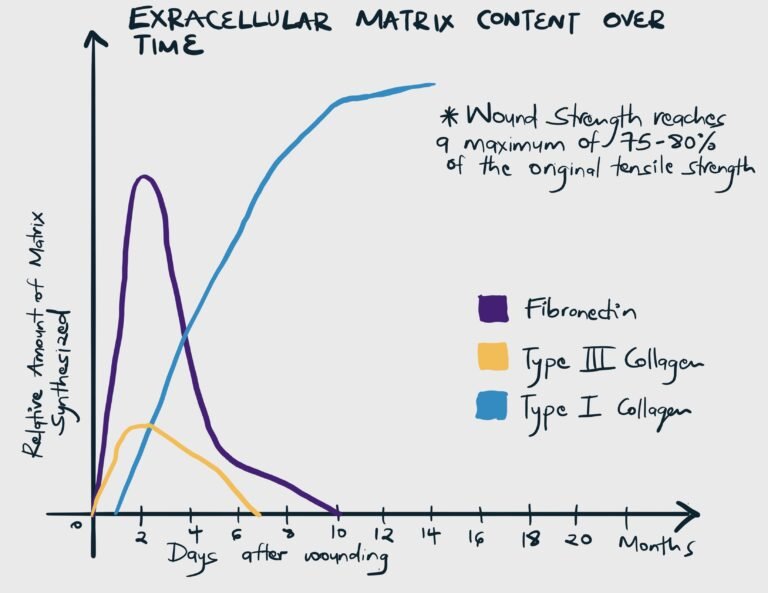
Extracellular matrix content with time

Wounds and Wound Healing

Overview Knowing the physiology and pathology behind wounds is important in surgery since it is a specialty that primarily deals with wounds. Term Definition Wound A break in the integrity of skin or tissue, often associated with disruption of structure…

Special Burns

Paediatric Burns Additional measures when treating burns in children should be considered since their anatomy and physiology is different compared to adults. In addition, children may have special psychososcial and educational needs when it comes to burns. Majority of burns…

Management of Burns

Pre-Hospital Treatment and First Aid Outpatient management Outpatient management is reserved for burns that cover <10% BSA (<5% in children and elderly) and no third-degree burns. Treatment involves disinfection, dressing, and pain management. Inpatient observation overnight is recommended for patients…

Burns

Overview A burn is defined as the response of the skin, mucous membrane, and subcutaneous tissues to thermal and other few non-thermal injuries. Treatment of burns is complex (hence the need for specialised burn centres), and depends on the site…

Acute subdural hematoma

Head Injury

General principles of head injury Scalp The Scalp is very vascular and bleeds a lot (messy, but rarely causes shock). The patient’s Hx is very important in making the differentials for a head injury. Monroe-Kellie Doctrine The Monroe-Kellie Doctrine states…

Facial Nerve Palsy

Facial nerve palsy is the weakness or paralysis of facial muscles due to pathology of the facial nerve. Course of the facial nerve Segment Description Intracranial The motor nucleus is situated in the pons and emerges through the cerebellopontine angle…

Chronic Otitis Media (COM)

Chronic otitis media is a long-standing infection of the middle ear (> 6 weeks), which is characterized by ear discharge and permanent perforation. The incidence of chronic otitis media is high in developing countries. It affects all age groups and…

Otitis Media with Effusion (OME)

Otitis media with effusion, also known as serous otitis media, is characterized by the accumulation of non-purulent effusion in the middle ear cleft, behind an intact tympanic membrane, without signs and symptoms of acute infection. If it persists for more…

Acute Otitis Media (AOM)

Acute otitis media, also known as acute suppurative otitis media, is an acute infection of the middle ear canal. It is defined as the first 3 weeks of a process in which the middle ear shows signs and symptoms of…

A moment of your time
Step 1 of 2

You are the reason this exists. Got 60 seconds? Help us improve Hyperexcision for every medical student who uses it.

The Hyperexcision Team