Ventilator-associated Lung Injury (VALI) is acute lung injury caused or worsened by mechanical ventilation. ****It can be caused by both invasive and non-invasive mechanical ventilation.
Evidence of alveolar overdistension or atelectasis
Deterioration despite ventilation
Mechanisms of VALI
Mechanism
Description
Oxygen toxicity
Reactive oxygen species (ROS) are produces during prolonged exposure to high concentrations of oxygen. An FiO2 of < 60% should be targeted.
Microbarotrauma (Volutrauma)
High tidal volumes excessively stretches alveoli, even in the setting of normal airway pressures.
Macrobarotrauma
Pressure-related overdistension which leads to pneumothorax, pneumomediastium, and subcutaneous emphysema. A key lung protective strategy is Pplat < 28 – 30 cmH20 in ARDS
Repeated alveolar opening and closing causes shear stress. An appropriate PEEP helps to keep alveoli open, but excessive PEEP can cause overdistension.
Biotrauma
Mechanical injury causes inflammatory mediators to be released leading to systemic inflammation and multiorgan failure
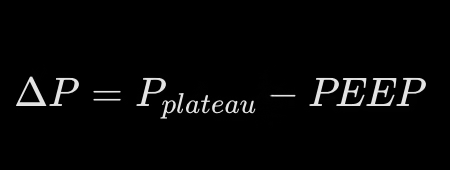
Driving pressure is the pressure that is applied to the alveoli to expand them during inspiration.
A higher driving pressure is associated with mortality in ARDS and is an important marker of ventilator-induced stress.
Physiologically, driving pressure is the ratio of tidal volume (CT) to respiratory system compliance (Crs)Driving pressure can be easily calculated at the bedside using Pplat – PEEP in a patient that is passive on the ventilator. Alveolar pressure rises from baseline (PEEP) at the end of expiration up to a maximum static stretch (Pplat) at the end of inspiration
Parameter and targets
Parameter
Target
Driving pressure (delta P)
< 15 cmH20. A higher driving pressure is associated with VALI.
Pplat
< 30 cmH20. A high Pplat is associated with barotrauma and overdistension.
The aerated functional parts of the lungs in ARDS is greatly reduced. This is known as the ‘baby lung’ concept.
The ‘baby lung’ is small with reduced compliance. Pushing the same 6 – 8 ml/kg tidal volume into a lung with low-compliance causes a high driving pressure and greatly overdistends the lungs.
A higher PEEP in ARDS recruits collapsed alveoli, improves lung compliance and reduces driving pressure.
A lower tidal volume in ARDS also decrease driving pressure, with some permissive hypercapnia (provided the pH of the patient remains acceptable).
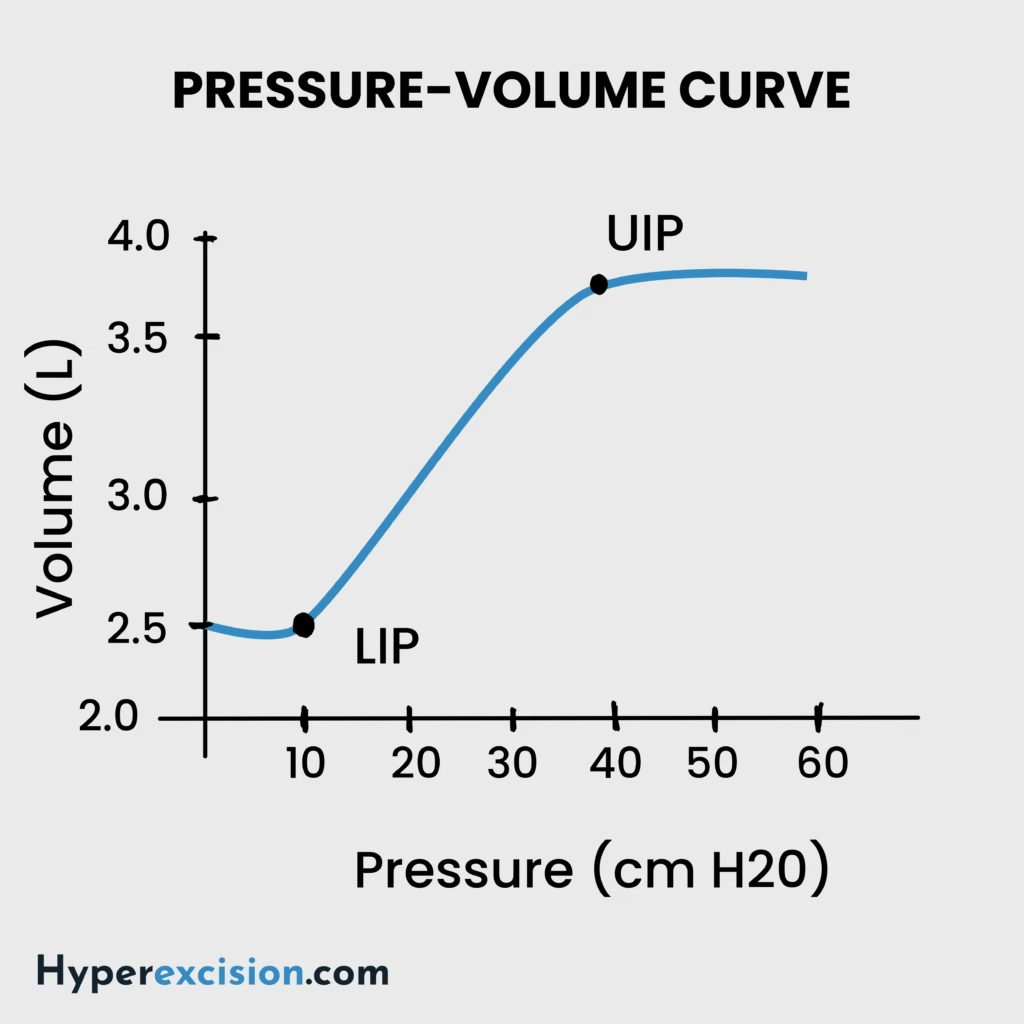
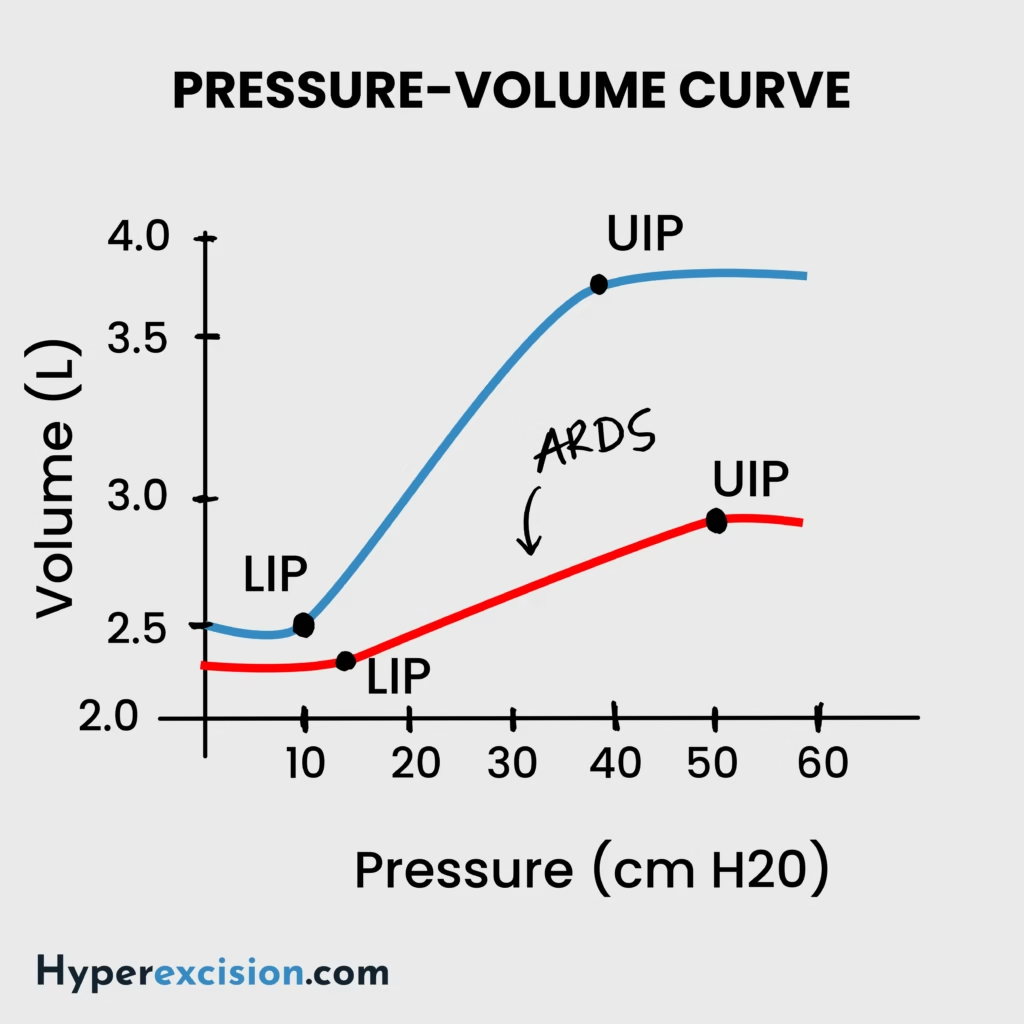
Pressure-Volume (PV) Curve
The pressure-volume curve of the respiratory system is sigmoidal with a lower inflexion point (LIP) and upper inflexion point. The ventilation range should be between the LIP and UIP
To provide the best experiences, we use technologies like cookies to store and/or access device information. Consenting to these technologies will allow us to process data such as browsing behavior or unique IDs on this site. Not consenting or withdrawing consent, may adversely affect certain features and functions.
Functional
Always active
The technical storage or access is strictly necessary for the legitimate purpose of enabling the use of a specific service explicitly requested by the subscriber or user, or for the sole purpose of carrying out the transmission of a communication over an electronic communications network.
Preferences
The technical storage or access is necessary for the legitimate purpose of storing preferences that are not requested by the subscriber or user.
Statistics
The technical storage or access that is used exclusively for statistical purposes.The technical storage or access that is used exclusively for anonymous statistical purposes. Without a subpoena, voluntary compliance on the part of your Internet Service Provider, or additional records from a third party, information stored or retrieved for this purpose alone cannot usually be used to identify you.
Marketing
The technical storage or access is required to create user profiles to send advertising, or to track the user on a website or across several websites for similar marketing purposes.