Dr Jeffrey Kalei

Dr Jeffrey Kalei

Author and illustrator for Hyperexcision. Interested in emergency room medicine. I have a passion for medical education and drawing.

Antipsychotics

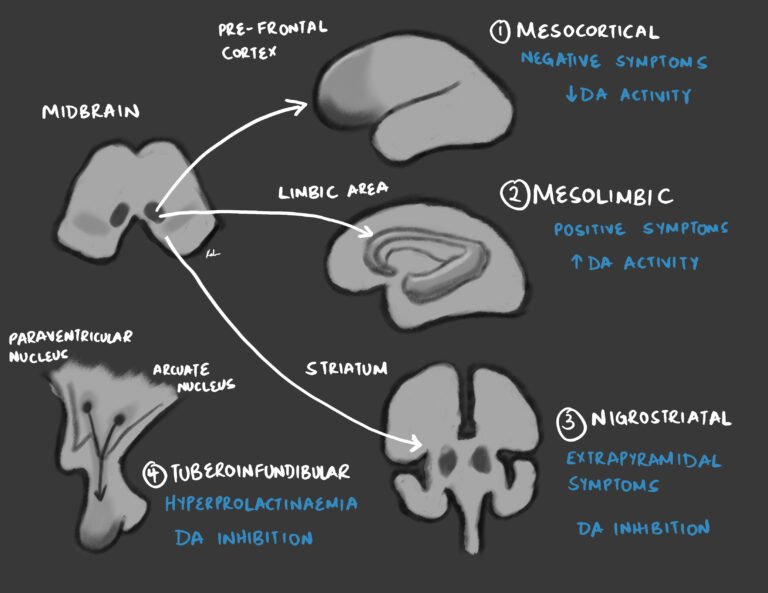
Overview Generally, antipsychotics are dopamine antagonists (D2 receptors). Remember the primary theory behind psychotic disorders is dopamine overproduction Antagonizing dopamine is a useful way to block psychotic symptoms. Dopaminergic pathway Function Nigrostriatal Motor Control (Responsible for extrapyramidal side effects) Mesolimbic…


Congenital Infections (TORCH Infections)

Specific symptoms Diagnosis Definitive treatment Congenital toxoplasmosis Diffuse calcifications on MRI, hydrocephalus Toxoplasma titers (IgM) Pyrimethamine and Sulfadiazine + Leucovorin Congenital syphilis Palm/sole rash, periostitis VDRL-RPR; FTA-ABS, CSF analysis Penicillin G Congenital rubella Cataract, deafness, heart defects (PDA), blueberry muffin…

Neonatal Hypotonia

Neonatal hypotonia is a state of poor muscle tone at rest that is characterised by a “rag doll” feel, poor sucking, a weak cry, and increased joint mobility. It may or may not involve muscle weakness. Causes of neonatal hypotonia…

Neonatal Seizures

Neonatal seizures are seizures occurring in the first 28 days of life. Most seizures occur between 12 and 48 hours of life, and these are associated with ischemia or haemorrhage. Seizures first presenting more than 40 hours of life are…

Neonatal Sepsis

Neonatal sepsis is a life-threatening bloodstream infection that affects infants < 28 days old. Definition of terms Term Definition Suspected sepsis Presence of sepsis risk factors in the baby, or findings suggesting sepsis regardless of whether there are symptoms or…

Neonatal Jaundice

Overview Neonatal jaundice refers to yellowness of the skin and mucous membranes due to elevated bilirubin within the first 28 days of life. Ill-appearing babies with jaundice are more likely to have infections or metabolic disorders. Well-appearing babies are more…