History
A 29-year-old man presents with yellow discoloration of the eyes
Q1. What is jaundice?
Reveal answer
- Jaundice is the yellowish staining of the skin, sclerae, and mucous membrane by excess plasma bilirubin
Jaundice occurs when there is a marked increase in production, decreased uptake, or decreased excretion of bilirubin.
Bilirubin stains all tissues but jaundice is most intense in the face, trunk, and sclerae
The deep yellow staining of jaundice can acquire a green hue if is long-standing
Q2. At what concentration of conjugated bilirubin is jaundice visible?
Reveal answer
Jaundice is visible when the concentration of bilirubin exceeds 3mg/dL (60umol/L)
Q3. What is the earliest sign of jaundice?
Reveal answer
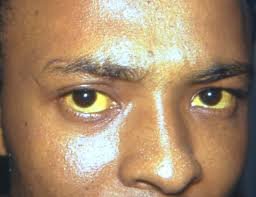
- Scleral icterus
Can also present first under the tongue as these two regions have very superficial blood vessels
The sclerae also have a high affinity for bilirubin due to their high elastin content. Its white colour also makes it easy to appreciate the yellow tinge
Q4. Where else can jaundice be appreciated?
Reveal answer
- Mucous membranes
- Palms
- Soles
- The skin of the chest, abdomen, and legs
The sclerae, mucous membranes, palms, and soles have more bilirubin since they are less exposed to sunlight and hence have less photodegradation of bilirubin
Jaundice spreads down the body starting with the face (including the eyes and mucous membranes) then the chest, abdomen, and legs
Q5. What are other causes of yellow skin?
Reveal answer
- Yellow skin can also be caused by carotene and other rare chemical toxins
However, carotene does not stain the sclera. It accumulates in the skin of the forehead, around the alae nase, and in the palms and soles.
Thyroid hormone is required to convert carotene into Vitamin A. Hypothyroid individuals can get carotinemia (yellow skin) and nyctalopia
Q6. Describe the normal bilirubin metabolism
Reveal answer
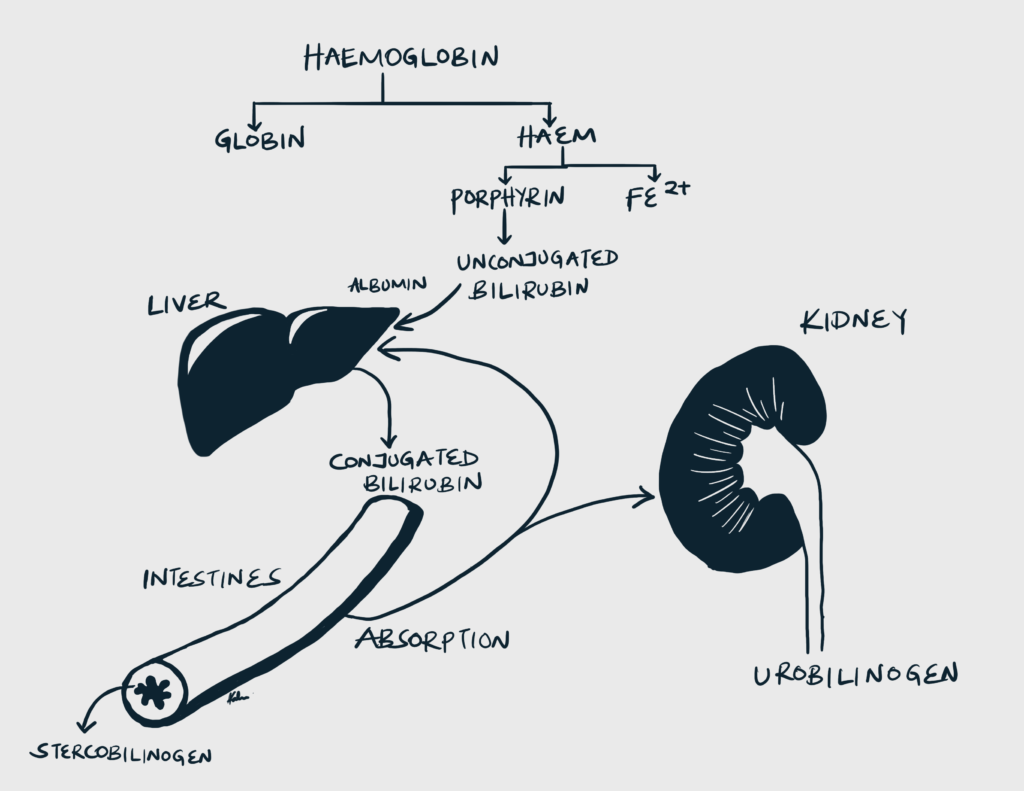
- Hemoglobin is degraded into unconjugated bilirubin, iron, and globin
- Unconjugated bilirubin circulates bound to albumin (hence cannot be filtered by the kidneys)
- Unconjugated bilirubin is taken up by the liver and combined with glucuronic acid to form water-soluble conjugated bilirubin
- Conjugated bilirubin is excreted into the intestines with bile
- Bacterial enzymes convert conjugated bilirubin into urobilinogen
- Most urobilinogen is lost in feces as stercobilin
- Small amounts are reabsorbed by the intestines and re-excreted in bile (enterohepatic circulation) and some in urine
- Excess amounts of water-soluble conjugated bilirubin in blood is filtered by the kidneys and excreted in urine
Q7. How is jaundice classified?
Reveal answer
- By the site of the problem
- Pre-hepatic jaundice
- Hepatocellular jaundice
- Cholestatic/obstructive jaundice
- By the type of circulating bilirubin
- Conjugated hyperbilirubinemia
- Unconjugated hyperbilirubinemia
Q8. What are the causes of unconjugated hyperbilirubinemia?
Reveal answer
- Hemolysis: Malaria, DIC, Sickle Cell Disease, Antimalarials
- Ineffective erythropoiesis:
- Impaired hepatic uptake: Drugs (Paracetamol, Rifampicin), Ischemic hepatitis
- Impaired conjugation: Gilbert’s, Criggler-Najjar
- Physiological neonatal jaundice
- Overproduction of unconjugated bilirubin: Hemolysis e.g. Malaria/DIC, ineffective erythropoiesis
Stool and urine are normal in color since unconjugated bilirubin is bound to albumin and is water-insoluble.
Q9. What are the causes of conjugated hyperbilirubinemia?
Reveal answer
- Hepatocellular dysfunction: hepatitis, drugs, alcohol, cirrhosis, metastasis, abscess, hemochromatosis, etc.
- Cholestasis: gallstones in the common bile duct, pancreatic cancer, primary biliary cholangitis, primary sclerosing cholangitis, Mirrizi’s syndrome, drugs, etc.
Pale stool + dark urine = conjugated bilirubin
Conjugated bilirubin is water-soluble and is excreted in urine making it dark-yellow to brown. Shaking the specimen produces yellow foam because bile salts lower the surface tension of water
Feces become pale as less conjugated bilirubin enters the gut
Can result in intractable pruritus when severe which is best treated by relieving the obstruction
For the past week, he has felt unwell with decreased oral intake, a low-grade fever which he recorded at about 37.7 C, fatigue, anorexia, nausea, and occasional vomiting. He noticed that his eyes became yellow about 4 days ago. Since that time he has had continuous mild pain in his right upper abdomen. His urine has also gotten darker. There is no change in the color of his stool.
Q10. What are the differentials for dark-colored urine?
Reveal answer
- Biliary obstruction: dark yellow-brown urine with jaundice, pale stools, and RUQ pain
- Hemolysis: dark urine accompanying fatigue, jaundice, and back/abdominal pain
- Hematuria
- Blood at the start of voiding that clears = urethral source
- Blood at the end of voiding = bladder or prostate source
- Blood throughout voiding = upper urinary tract source
- Hematuria + H/O smoking = bladder cancer
- Rhabdomyolysis: dark urine following crush injury or physical exertion
- Dehydration
- Drugs e.g. Rifampin, Metronidazole and B complex vitamins
Differentials according to colour
| Colour of urine | Cause |
|---|---|
| Red | Blood, food pigments, rifampin, porphyrins |
| Blue/green | Food dye, Indomethacin, Amitriptyline, UTI caused by Pseudomonas |
| Brown | Metronidazole, senna, liver disease, kidney disease, myoglobin in rhabdomolysis |
| Orange | Hepatobiliary disease, dehydration |
Q11. What are the causes of severe anorexia?
Reveal answer
- Hepatitis
- Carcinoma of the liver and stomach
- Pulmonary tuberculosis
- Chronic renal failure
- Drugs such as Chloroquine, Metronidazole and Antibiotics
Q12. What are the causes of non-colicky right hypochondriac pain?
Reveal answer
- Liver: hepatitis, amoebic liver abscess, budd-chiari syndrome, congestive heart failure
- Gall bladder: acute cholecystitis
- Duodenum: duodenal ulcer
- Diaphragm: pleuritis, right lower lobe pneumonia or pneumonitis, subdiaphragmatic abscess
Non-colicky right hypochondriac pain can be caused by gall stones, urolithiasis, or intestinal colic due to duodenal ulcer or amoebic colitis
Q13. What symptoms are associated with complicated liver disease?
Reveal answer
- Hepatic failure: H/O altered consciousness, drowsiness, tremors
- Bleeding disorder or Leukemia: H/O abnormal bleeding, purpura, petechiae
- Hepatorenal syndrome: H/O oliguria
- Ascites: H/O abdominal distension
- Portal hypertension: H/O hematemesis, melaena
- Spontaneous bacterial peritonitis; H/O sudden abdominal pain, high fever, abdominal distension
Q14. What further questions are important to ask in the medical and social history of a patient who presents with jaundice?
Reveal answer
- Blood transfusions
- Travel history
- Sexual activity
- Contacts with jaundice
- Family history of jaundice
- Alcohol use
- Recreational drug use
- Intravenous drug use (IDU)
- All medications
Where have you been?… Where are you going?… Who are you with?… What are you taking?…
He has no significant past medical history. However, he has been unable to donate blood within the past year for reasons he cannot recall. He has not traveled recently. He works as an accountant. His only medication is Ibuprofen.
For his social history, he currently uses marijuana and MDMA (Ecstasy) recreationally and has a prior history of Injection Drug Use (IDU) and cocaine. For his sexual history, he has had 5 sexual partners in the past 6 months. He does not consistently use condoms.
Q15. What clues in this patient’s history points towards acute viral hepatitis?
Reveal answer
- Acute onset of prodromal symptoms (fever, anorexia, nausea, and vomiting) followed by jaundice and right upper quadrant abdominal pain
- Prior History of IDU
- Illicit drug use (predisposes to infection and the possibility of hepatotoxic agents)
- Unprotected sexual contact
Prodromal symptoms usually precede jaundice by a few days to 2 weeks
Once jaundice develops the prodromal symptoms often regress
Ecstasy is a RARE cause of acute (toxic) hepatitis
Q16. Which hepatitis virus can cause both acute and chronic hepatitis?
Reveal answer
- Hepatitis B virus
- A – Acute only
- B – Both acute and chronic
- C = Chronic only
- D = chronic only, but requires HBV
- E = acute only
Q17. For what reason could this patient have been denied the opportunity to donate blood?
Reveal answer
- There are various possible reasons including tattoos, history of injection drug use, anemia from other causes etc.
- This patient may have tested positive for infectious disease including either one of the following:
- Positive HIV test
- Hepatitis B surface antigen
- Hepatitis B core antibody
- Hepatitis C virus antibody
- HBV DNA
- HCV RNA
- Syphilis serology
- Antibodies for Trypanosoma cruzi
Q18. What infections are travelers at risk of?
Reveal answer
- Hepatitis A
- Malaria
- Typhoid fever
- Gastroenteritis
- Traveler’s diarrhea
- Amoebiasis
- Giardiasis
Hepatitis A is endemic in Africa and South America
Q19. What drugs are known to cause jaundice?
Reveal answer
| Mechanism | Drugs |
|---|---|
| Hemolysis | Antimalarials e.g. dapsone |
| Hepatitis | Paracetamol overdose, anti-TB – isoniazid, rifampicin, pyrazinamide, monoamine oxidase inhibitors, sodium valproate, halothane, statins |
| Cholestasis | Flucloxacillin, co-amoxiclav, nitrofurantoin, steroids (anabolic, contraceptives), sulfonylurea, prochlorperazine, chlorpromazine |
Q20. What transmissible infections can illicit drug use predispose to?
Reveal answer
- Hepatitis B and C
- HIV
Other infections include skin and soft-tissue infections, septic pulmonary emboli, infected deep venous thromboses, and endocarditis
Physical Examination
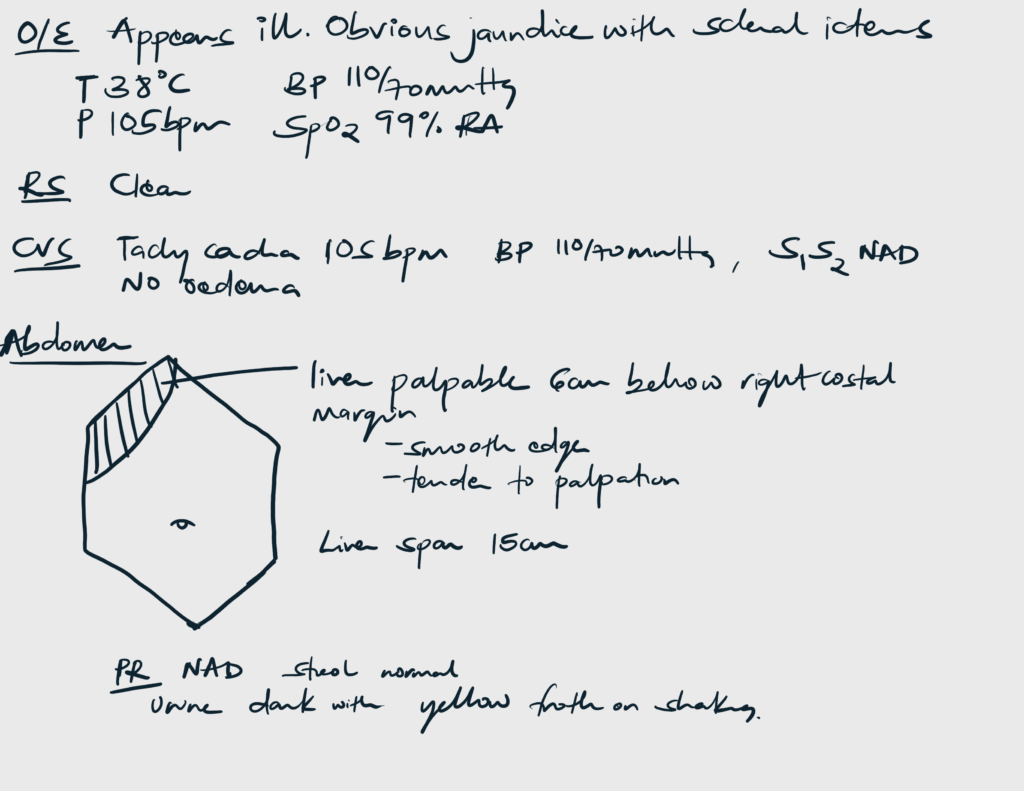
On physical exam, he appears ill and has obvious jaundice with scleral icterus. Temperature is 38.0 C, Blood Pressure 110/70 mmHg, Heart Rate 105 beats per minute, Respiratory Rate 16 breaths per minute, and Room air SpO2 of 99%. The lung and heart are normal apart from tachycardia.
The upper border of the liver is in the 6ICS MCL. Liver span is 15 cm in percussion and palpable 6 cm below the right costal margin. The liver edge is smooth and tender to palpation. The spleen edge is non-enlarged. There are no stigmata of peripheral liver disease and no peripheral edema.
Q21. What are some causes of acute hepatitis?
Reveal answer
- Viral causes
- Toxic causes
- Autoimmune causes
- Exposures e.g. Alcohol
- Ischemia
- Pregnancy
Q22. What is latent jaundice?
Reveal answer
Serum bilirubin between 1-2mg, however no scleral icterus is seen
Q23. What are the peripheral stigmata of liver failure?
Reveal answer
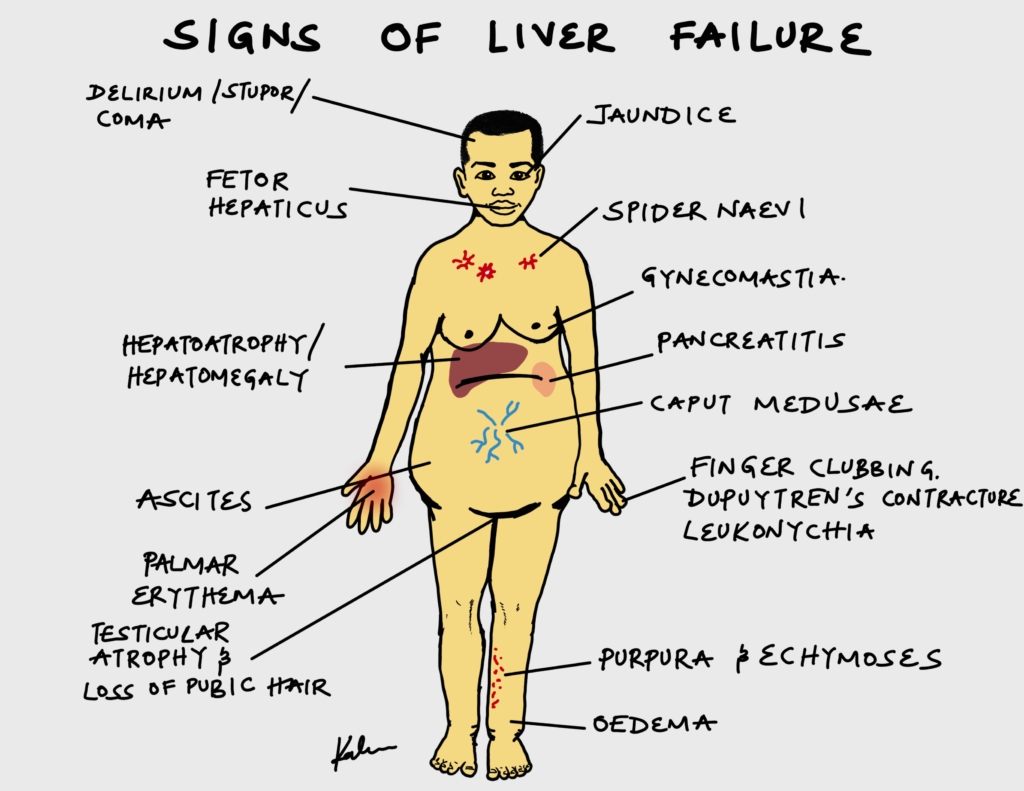
- Jaundice
- Gynaecomastia
- Spider naevi
- Palmar erythema
- Loss of pubic and axillary hair
- Testicular atrophy
- Flapping tremors
- Altered consciousness
- Dupuytren’s contracture
Q24. Why is the liver tender in acute hepatitis?
Reveal answer
- Inflammation causes stretching of Glisson’s capsule which causes pain in the right upper quadrant
Glisson’s capsule is AKA the liver capsule
Q25. What are some causes of tender hepatomegaly?
Reveal answer
- Hepatitis
- Amoebic liver abscess
- Bacterial abscess
- Cholangitis
- Congestive Heart Failure
- Fast growing hepatoma
Non-tender hepatomegaly can be caused by malaria, schistosomiasis, typhoid, tuberculosis, hydatid cyst, fatty liver, malignancy, lymphoma, leukemia, hydatid cysts etc.

Q26. What is a liver span? How is it measured and what is its normal value?
Reveal answer
- The liver span is the distance between the upper and lower border of the liver (anterior hepatic projection) in the mid-clavicular line (MCL)
- It is measured by percussion downwards from the 2nd rib in the MCL. The upper border is detected as dullness and the lower border is detected as a shift from dullness to normal abdominal tympani, and confirmed by palpation.
- The normal liver span is 8 – 12 cm
Q27. What are the differentials for hepatomegaly with jaundice?
Reveal answer
- Hepatitis
- Liver abscess
- Obstructive jaundice
- Hemolytic anemia
- Storage disorder
- Liver malignancy
Q28. What investigations are needed for this patient?
Reveal answer
- Liver Function Testing and Coagulation Panel
- Viral Hepatitis Serology to confirm etiology
- Complete Blood Count for leucocytosis
- Electrolytes
- HIV testing given his risk factors
Investigations
These are his lab results:
| Investigation | Value | Reference Range |
|---|---|---|
| AST | 1234 U/L | 10-45 U/L |
| ALT | 1560 U/L | 10-50 U/L |
| ALP | 394 | 40 – 124 U/L |
| Total Bilirubin | 13.4 mg/dL | 0-1 mg/dL |
| Direct bilirubin | 12.2 mg/dL | 0 – 0.35 mg/dL |
| INR | 2.3 | 0.9 – 1.2 |
| aPTT | 52 seconds | 20 – 40 seconds |
Q29. Interpret these results
Reveal answer
- This patient most likely has acute viral hepatitis with notable liver injury and disruption of synthetic function
- There is significantly elevated AST and ALP
- His ALP > AST with an AST:ALP ratio is 0.79 which points towards acute viral hepatitis
- His total bilirubin and direct bilirubin are elevated with a major fraction of the elevated bilirubin being direct (conjugated) bilirubin
- He also has an elevated INR and aPTT.
Q30. What parameters in Liver Function Testing reflect the degree of hepatocyte damage?
Reveal answer
- AST (SGOT)
- ALT (SGPT)
Q31. What parameters in Liver Function Testing reflect the detoxification and excretory function of the liver?
Reveal answer
- Total serum bilirubin
- Direct bilirubin
- Indirect bilirubin
Q32. What parameters in Liver Function Testing reflect cholestasis?
Reveal answer
- ALP
- 5’ nucleotidase
- GGT
Q33. What parameters in Liver Function Testing reflect the synthetic function of the liver?
Reveal answer
- Albumin
- Total Protein
- Prothrombin Time or INR
Q34. What is the normal ratio of AST:ALT?
Reveal answer
0.7-1.4
Q35. What ratio of AST:ALT is seen in alcoholic hepatitis vs acute viral hepatitis?
Reveal answer
- Alcoholic Hepatitis: AST:ALT > 2.0
- Acute Viral Hepatitis: AST: ALT <1
Q36. What is needed to make the diagnosis of chronic hepatitis?
Reveal answer
Persistently elevated ALT and AST beyond 6 months
Q37. What lab parameter reflects the severity of damage in acute hepatitis?
Reveal answer
Prolongation of the Prothrombin Time or INR
These are the results of his hepatitis serology:
| Test | Result |
|---|---|
| IgM Anti-HAV | Negative |
| IgG Anti-HAV | Negative |
| IgM AntI-HBc | Positive |
| IgG Anti-HBc Hep B | Negative |
| HBsAg | Positive |
| Anti- HBs | Negative |
| HBeAg | Positive |
| Anti-HBe | Negative |
| Anti-HCV | Positive |
Q38. What is the interpretation of a positive anti-HAV IgM?
Reveal answer
Acute Hepatitis A
Q39. What is the interpretation of a positive anti-HCV IgM?
Reveal answer
Acute Hepatitis C
Q40. What is the interpretation of a positive anti-HCV IgG?
Reveal answer
- Chronic Hepatitis C
| Test | Interpretation |
|---|---|
| Anti-HAV IgM | Acute Hepatitis A |
| Anti-HCV IgM | Acute Hepatitis C |
| Anti-HCV IgG | Chronic Hepatitis C |
Q41. Which serological marker for HBV is the first to become abnormal during infection?
Reveal answer
HBsAg

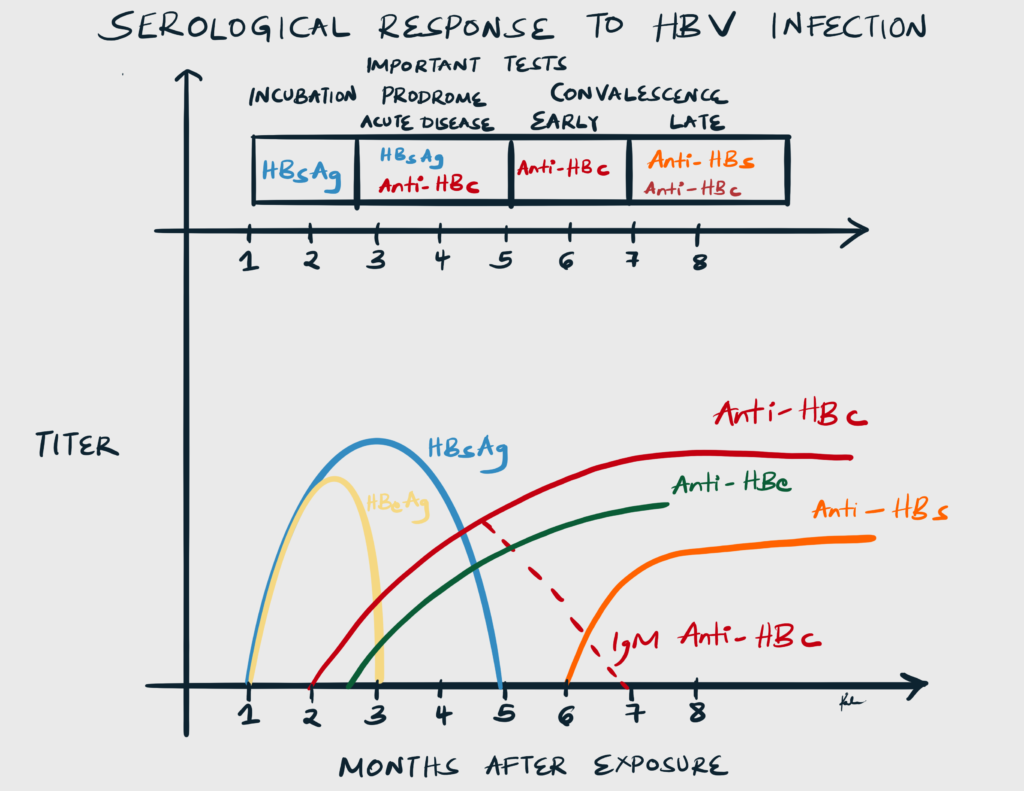
Q42. Which serological marker for HBV indicates high infectivity?
Reveal answer
- HBeAg
It reflects the activity of HBV DNA Polymerase, hence represents viral load
Q43. What does a positive anti-HBs imply?
Reveal answer
- Recent infection (Anti-HBc is also positive)
- Previous vaccination (Anti-HBc is negative)
Q44. What does a persistently elevated HBsAg and anti-HBc (IgG) imply?
Reveal answer
Chronic infection
Q45. How can the serological markers for hepatitis B be interpreted?
Reveal answer
HBV Serology is complex
HBV + Liver function tests
| Incubation | Acute | Carrier | Recovery | Vaccinated | |
|---|---|---|---|---|---|
| HBsAg | + | + | + | – | – |
| HBeAg | + | + | +/- | – | – |
| Anti-HBs | – | – | – | + | + |
| Anti-HBe | – | – | +/- | – | – |
| Anti-HBc IgM | – | + | +/- | – | – |
| Anti-HBc IgG | – | + | + | + | – |
| Liver Function Tests | Normal | Markedly increased | Increased | Normal | Normal |
Q46. What is the diagnosis?
Reveal answer
- This patient has Acute Hepatitis B
- This illness is of acute onset with prodromal symptoms (fatigue, anorexia, nausea, and vomiting) preceding the onset of jaundice by 1-2 weeks
- This patient has risk factors for infection with HBV including IDU and unprotected sexual contact
- There is obvious icterus with, an enlarged and tender liver
- ALT and AST are elevated (peak levels usually between 400-4000 IU/L). ALP is increased to a lesser degree
- There is hyperbilirubinemia with primarily an increase in conjugated bilirubin
- The core IgM, surface antigen, and e-antigen for Hepatitis B are all elevated indicating acute infection
Q47. What suggests that this patient also has chronic hepatitis C?
Reveal answer
- He has a positive Hepatitis C antibody
- There is a possibility he might have a chronic infection with HCV given the history of being previously rejected to donate blood
- He also has a history of IDU and unprotected sex which are risk factors for Hepatitis C
85% of individuals develop silent chronic infection with HCV
Q48. Why does this patient not have hepatitis A?
Reveal answer
- Hepatitis A IgM is not elevated
Hepatitis A IgM is elevated in acute infection with hepatitis A
Note that this patient has also not been vaccinated against hepatitis A since Hepatitis A IgG is negative
Q49. What are other infective causes of hepatitis?
Reveal answer
- EBV
- CMV
- Leptospirosis
- Malaria
- Q fever
- Syphilis
- Yellow Fever
Q50. Which further investigations can be used to tell the severity of liver damage?
Reveal answer
Liver Biopsy or Elastography
Treatment
Q51. What is the best approach to treating Acute Hepatitis B?
Reveal answer
- Only supportive treatment is recommended in the acute phase
- Support liver function and monitor for liver failure (occurs in <1%)
- Advise the patient to avoid alcohol
- Avoid elective surgery as it can lead to post-operative liver failure
- Immunize sexual contacts
- Long-term monitoring of Liver Function based on ALT and AST
- Monitor for Hepatocellular carcinoma via ultrasound
- Start Monotherapy at 6 months if surface antigen remains positive
There is no specific treatment in the acute phase since 99% recover without any assistance
Q52. Which patients are referred for antiviral treatment for Hepatitis B?
Reveal answer
- Chronic hepatitis B
- Chronic liver inflammation (ALT ≥ 30 IU/L)
- Cirrhosis
- HBV DNA> 2000 IU/mL
Q53. What antiviral agents are used as monotherapy for treating Hepatitis B?
Reveal answer
- Agents for monotherapy include Tenofovir, Lamivudine, Adefovir or Entecavir
Pegylated (PEG) is falling out of favor since it is less tolerated by patients
Q54. When can interferon be used to treat Hepatitis B?
Reveal answer
- In patients with low viral load and elevated transaminases
To augment the immune system
Q55. What is the contraindication to using interferon to treat Hepatitis B?
Q56. In what situation is monotherapy for Hepatitis B avoided?
Reveal answer
- In patients co-infected with HIV
To prevent HIV antiviral drug resistance
Specialist treatment with a combination of antivirals is recommended
Q57. What is the best approach to treating chronic Hepatitis C?
Reveal answer
- Genotyping
- Combination therapy with Sofosbuvir/velpatasvir or glecaprevir/pibrentasvir or Ledispavir/sofosbuvir
- Long-term monitoring of HCV RNA (indicates response to treatment)
- Avoid alcohol
In case of Acute Hepatitis C infection, viral Load (HCV RNA) is monitored from diagnosis and continued for 12 weeks.
Treatment can be discontinued at 12 weeks if the patient recovers. If the infection turns chronic treatment is continued indefinitely.
Recovery is uncommon in acute hepatitis C (10-15%). Progression to chronic hepatitis is the rule.
Genotype 1 is much easier to treat than Genotype 2 and 3.
Genotype 4, 5 and 6 are more common in lower income countries
Q58. What is the definitive cure for chronic hepatitis (and cirrhosis)?
Reveal answer
Liver transplant
Q59. What is the treatment of Hepatitis A?
Reveal answer
- Only supportive (however, the vaccine can help)
- Avoid alcohol
Hepatitis A is self-limiting
Rarely, Interferon alpha can be used for fulminant hepatitis
Prevention
Q60. In general, what measures can help prevent acute hepatitis?
Reveal answer
- Hygiene
- Safe sex practices
- Vaccination against Hepatitis A and B
- Precautions in handling bodily fluids and lab equipments
Q61. Which viruses causing acute hepatitis have vaccines been developed against?
Reveal answer
- Hepatitis A Virus vaccine (given to individuals with risk factors e.g. travelers, crowded areas, oral-anal sexual contact)
- Hepatitis B Virus Vaccine (given to everyone)
Q62. What is the cutoff weight for newborns to receive Hepatitis B vaccine?
Reveal answer
- Once the newborn weighs ≥ 2 kg
This is the only exception to the rule that preterm infants should receive vaccine according to their chronological age
In Kenya it is routinely given as part of the pentavalent vaccine (Penta) at 6, 10, and 14 works
Q63. How many doses are needed to vaccinate against Hepatitis A and Hepatitis B?
Reveal answer
- 2 doses for Hepatitis A
- 3 doses for Hepatitis B
Q64. If a child is lost to follow-up before completing their Hepatitis A or Hepatitis B immunization do they need to restart the series?
Reveal answer
- No, they should pick up from where they left off
2 doses for Hepatitis A
3 doses for Hepatitis B
Q65. What is the recommended treatment for a newborn of a mother with active Hepatitis B?
Reveal answer
Hepatitis B immune globulin followed by Hepatitis B vaccine at birth
Q66. Can a woman with chronic Hepatitis C infection Breastfeed?
Reveal answer
- Yes
As long as there is no active bleeding from the nipples
Q67. What precuations can be taken by travelers to protect against Hepatitis A?
Reveal answer
- Drink only boiled water or bottled mineral water
- Pre-exposure prophylaxis given 2 weeks before travel to an endemic area
- Booster dose
- For patients who are previously unvaccinated the vaccine can be given as soon as travel is considered and the 2 dose series completed according to routine
Q68. What is the post-exposure prophylaxis for Hepatitis A Virus?
Reveal answer
- Hepatitis A Virus Immune Globulin + Hepatitis A Virus Vaccine within 2 weeks of exposure
- Hepatitis A Virus Immune Globulin if they are immunocompromised or have chronic liver disease
Q69. What is the post-exposure prophylaxis for Hepatitis B Virus?
Reveal answer
- Hepatitis B Virus immune globulin and Hepatitis B Virus Vaccine
This is what is typically given to children who are born to mothers with chronic Hepatitis B
Complications
Q70. What are the complications of Hepatitis B?
Reveal answer
- Fulminant hepatic failure
- Cirrhosis
- Hepatocellular cardinoma
- Cholangiocarcinoma
- Cryoglobulinemia
- Membranous nephropathy
- Polyarteritis nodosa
Q71. What are the complications of Hepatitis C?
Reveal answer
- Glomerulonephritis
- Cryoglobulinemia
- Thyroiditis
- Autoimmune hepatitis
- Polyarteritis nodosa
- Polymoyositis
- Porphyria cutaenea tarda
Q72. How does co-infection with HDV change the progression to cirrhosis?
Reveal answer
- t accelerates the progression to cirrhosis
HDV requires a protein coded by the HBV genome for its assembly
It is transmitted the same was as HBV
Q73. How does HCV change the risk of progression to alcoholic liver disease in alcoholics?
Reveal answer
It increases the risk
Key Learning Points
- Jaundice
- Jaundice is characterized by yellowing of the skin, sclerae, and mucous membranes due to excess bilirubin.
- Visible when bilirubin levels exceed 3 mg/dL.
- First apparent in the sclera and can spread to other areas, with a green hue in prolonged cases.
- Causes of Jaundice: Pre-hepatic, Hepatocellular and Cholestatic (Obstructive)
- Unconjugated Hyperbilirubinemia: Results from hemolysis, impaired hepatic uptake, or impaired conjugation.
- Conjugated Hyperbilirubinemia: Results from hepatocellular dysfunction or cholestasis.
- Clinical assessment
- Symptoms like fever, anorexia, nausea, and dark urine suggest liver issues.
- A history of risk factors (e.g., injection drug use, unprotected sex) helps in diagnosing specific types of hepatitis.
- Tender hepatomegaly and elevated liver span indicate liver inflammation.
- Peripheral stigmata of liver failure include jaundice, palmar erythema, and flapping tremors.
- Diagnosis
- Elevated AST and ALT suggest liver damage.
- Elevated direct bilirubin and ALP indicate conjugated hyperbilirubinemia.
- Prolonged INR reflects impaired synthetic liver function.
- Acute Hepatitis B: Positive HBsAg, with possible presence of HBeAg and elevated anti-HBc IgM.
- Chronic Hepatitis C: Positive anti-HCV antibodies, often with previous blood donation issues.
- Management of Hepatitis
- Supportive treatment with monitoring for liver failure.
- Long-term monitoring and antiviral therapy if chronic infection persists.
- For chronic hepatitis B: Tenofovir, Lamivudine, Adefovir, or Entecavir.
- Avoid interferon in the presence of cirrhosis due to risk of liver failure.
- Physical examination and serological tests are crucial for diagnosis and differentiation.
- Management involves supportive care and targeted antiviral treatments based on the specific type of hepatitis.