A 32-year-old P2+0 G33 at 32 weeks of gestation presents to the antenatal clinic with swelling and pain in her right leg for 3 days. On examination, her right leg is swollen, erythematous and has dilated superficial veins. On palpation, it is warm and tender. There is a 4 cm difference in leg circumference.
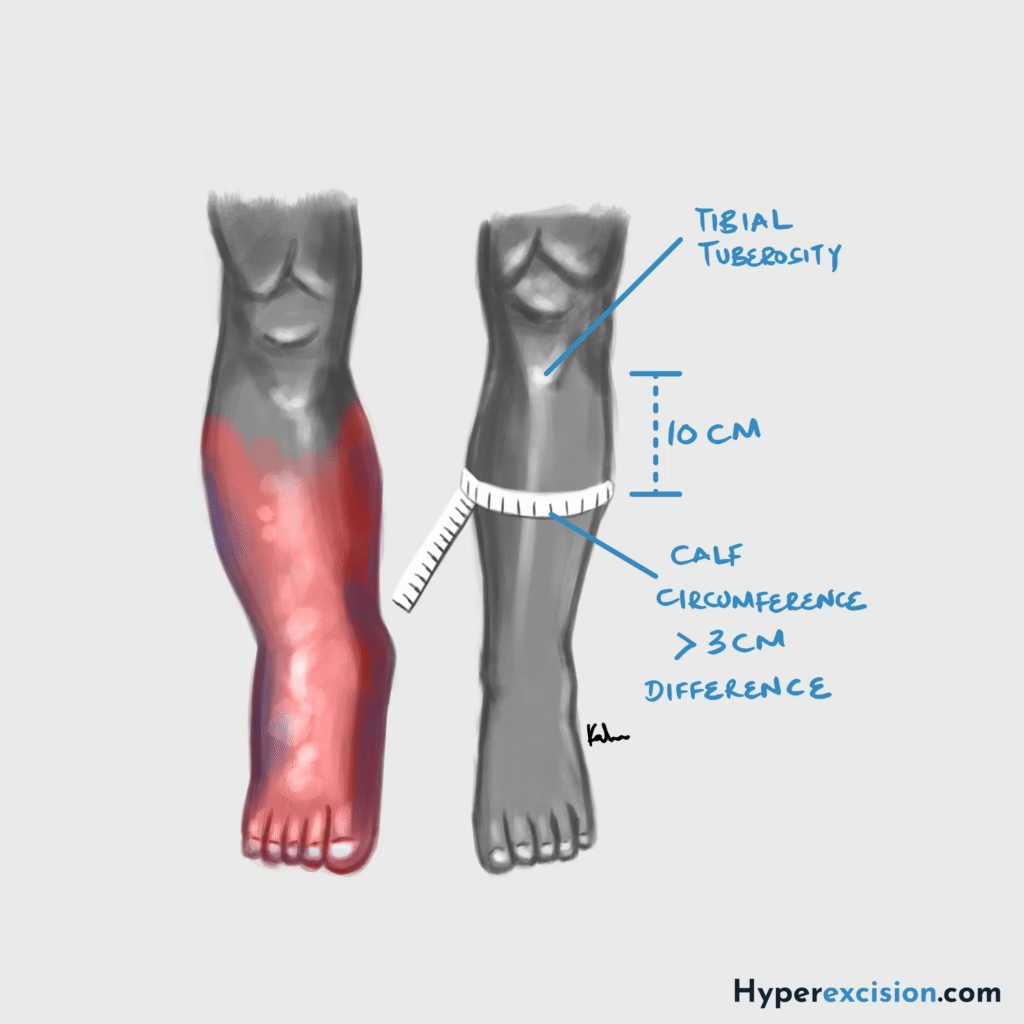
Q1. What is the most likely diagnosis?
Reveal answer
32-year-old P2+0 G3 with deep venous thrombosis at 32 weeks of gestation.
Q2. List 2 differentials
Reveal answer
Superficial thrombophlebitis (has a palpable cord)
Varicose veins
Lymphedema
Compartment syndrome
Ruptured popliteal cyst
Q3. What investigations can be used to confirm the diagnosis?
Reveal answer
Doppler ultrasound of the lower limb: Repeat negative ultrasound on days 3 and 7 in high-risk patients.
Magnetic resonance venography: if inconclusive. Especially for the iliac of pelvic vein thrombus
D-dimer is not useful since pregnancy causes a rise in D-dimer
V/Q SCAN or CTPA can be obtained for suspected PE
Q4. What are the predisposing factors for venous thromboembolism in pregnancy?
Reveal answer
Factors contributing to venous thromboembolism in pregnancy
| Component of Virchow’s triad | Factors |
|---|---|
| Hypercoagulability | Estrogen increases the production of fibrinogen, factor VII, IX and X. There is also resistance to protein C in the 2nd and 3rd trimester and reduced activity of protein S and Antithrombin III. The levels of fibrinolysis inhibitors also increases. |
| Stasis | Estrogen increases the production of fibrinogen, factor VII, IX and X. There is also resistance to protein C in the 2nd and 3rd trimester and reduced activity of protein S and Antithrombin III. The levels of fibrinolysis inhibitors also increase. |
| Endothelial injury | Endothelial injury from pre-eclampsia, puerperal sepsis, placental abruption and even delivery itself |
Q5. List 5 risk factors for thromboembolism in pregnancy
Reveal answer
Immobility
Parity ≥ 3
Varicose veins (gross)
Age > 35 years
Family history of VTE
Smoker
IVF conception
Low-risk thrombophilia
Multiple pregnancies
In Pregnancy Variable Antenatal FactorS Often Indicate Low Molecular Heparin Prophylaxis
Risk factors for thromboembolism in pregnancy
| Category | Risk factors |
|---|---|
| Pre existing risk factors | Maternal age > 35 years, thrombophilia, obesity (> 80 kg), history of thromboembolism, severe varicose veins, smoking, malignancy |
| Pregnancy-related risk factors | Multiple gestation, pre-eclampsia, grand multiparity, caesarean delivery (especially emergency), damage to pelvic veins, sepsis, prolonged bed rest |
| Transient risk factors | Dehydration, hyperemesis, sepsis, long-distance travel |
Q6. How many risk factors need to be present to classify the patient as either high-risk, medium-risk, or low-risk?
Reveal answer
| Risk | Description |
|---|---|
| High-risk | ≥ 4 risk factors or previous event |
| Medium risk | 3 risk factors or 2+ hospital admissions |
| Low-risk | < 3 risk factors |
Q7. What is the definitive treatment for this patient?
Reveal answer
Intravenous unfractionated heparin (UFH) for the acute phase
Check for adequate heparinization with aPTT
Switch to SC LMWH once the acute phase is over
Q8. What options exist for venous thromboembolism prophylaxis (VTE) in pregnancy?
Reveal answer
| Category | Measures |
|---|---|
| Pharmacological | Low molecular weight heparin (LMWH – preferred), unfractionated heparin (UFH) |
| Mechanical | Thromboembolic detergent stockings, intermittent pneumatic compression (peri-operative period) |
| General measures | Thromboembolic deterrent stockings, intermittent pneumatic compression (peri-operative period) |
LMWH and UFH are preferred since they cannot cross the placenta due to their large size and negative charge
Warfarin is contraindicated in pregnancy due to its teratogenic effects: low birth weight, hypoplastic nasal bridge, choanal atresia, cleft lip and palate, laryngomalacia and other skeletal abnormalities. It interferes with the y-carboxylation of osteocalcin and other bone proteins.
Direct oral anticoagulants (DOACs) are also not recommended in pregnancy
Q9. Why is low molecular weight heparin (LMWH) preferred over unfractionated heparin (UFH) during pregnancy?
Reveal answer
LMWH has less risk of osteoporosis, less requirement for monitoring, and less possibility for heparin induced thrombocytopaenia
Anti-Xa levels may be checked in obese patients or during renal failure after starting therapy with LMWH.
The target is 0.35 – 0.7 IU/mL
Enoxaparin 1mg/kg/d in 2 divided doses
Dalteparin 100 IU/kg/d with a maximum of 18,000 IU
Q10. Why is UFH preferred in the period immediately before delivery?
Reveal answer
It is easily reversed by protamine sulphate and has a shorter half-life than LMWH Anticoagulant activity is also easily monitored with aPTT
Not specifically related to pregnancy, but UFH can also be used in renal failure
Q11. What is given for venous thromboembolism (VTE) prophylaxis in high-risk patients during pregnancy?
Reveal answer
| Gestation by date | Thromboprophylaxis |
|---|---|
| 0 – 16 weeks | Unfractionated heparin (UFH) |
| 16 – 36 weeks | Aspirin and Low Molecular Weight heparin (LMWH) |
| 36 weeks to delivery | Unfractionated heparin (UFH) |
| During labour | None |
| Post-partum | Warfarin or LMWH |
UFH is stopped 12-24 hours before delivery
Treatment should continue for at least 6 weeks postpartum, using LMWH for high-risk patients
If required, warfarin can also be given from 16 – 36 weeks
Warfarin is safe to use during breastfeeding
The patient is also allowed to mobilise, elevate the legs, wear thromboembolic deterrent stockings and monitor for early warning signs
Other options include an IVC filter, percutaneous catheter thrombus fragmentation, and surgical embolectomy
Q12. When and for what duration is LMWH given for the prevention of VTE after delivery?
Reveal answer
LMWH is given 4-6 hours post-SVD and 6-12 hours post-caesarean delivery
Duration of VTE post-partum
| Risk | Duration |
|---|---|
| High-risk | LMWH for at least 6 weeks |
| Medium-risk | LMWH for at least 10 days |
| Low-risk | Mobilisation and avoid dehydration |