Lung cancer refers to tumors from respiratory epithelium, including bronchi, bronchioles, and alveoli. Globally, it is the most commonly diagnosed cancer and the leading cause of cancer deaths among both sexes combined. It occurs more in males than in females, however other subtypes such as adenocarcinoma occur more in women. Lung cancer most commonly presents later on in life, with the highest incidence occurring between the ages of 55-65 years. Patients’ 5-year survival rate is around 15%, and therefore lung cancer often has a poor prognosis.
It is important to calculate the patient’s cigarette pack-years when evaluating risk:
Pack-year cigarette history= quantity of cigarettes a person smoked per day/ number of cigarettes in a pack (usually 20) x the number of years of cigarette consumption
Phrenic nerve paralysis → elevation of the hemidiaphragm and dyspnea
Sympathetic nerve paralysis → Horner’s syndrome: enophthalmos, ptosis, miosis, and ipsilateral loss of sweating
Malignant pleural effusion → dyspnea
Pancoast’s (superior sulcus tumor) syndrome: from local extension of a tumor growing in the apex of the lung with involvement of the eighth cervical and first and second thoracic nerves → shoulder pain that characteristically radiates in the ulnar distribution of the arm
Superior vena cava syndrome from vascular obstruction
Pericardial and cardiac extension → tamponade, arrhythmia, or cardiac failure;
Growth of regional lymph nodes through lymphatic spread
Remote effects of tumor products (paraneoplastic syndromes)
Paraneoplastic syndromes of unknown etiology: Present with systemic symptoms such as anorexia, cachexia, weight loss, fever, and suppressed immunity.
Endocrine syndromes:
Hypercalcemia and hypophosphatemia resulting from the ectopic production by squamous tumors of parathyroid hormone (PTH) or, more commonly, PTH-related peptide
Hyponatremia with the syndrome of inappropriate secretion of antidiuretic hormone or atrial natriuretic factor by small cell cancer
Ectopic secretion of ACTH by small cell cancer. ACTH secretion usually results in additional electrolyte disturbances, especially hypokalemia
Skeletal–connective tissue syndromes: periostitis and clubbing
Neurologic-myopathic syndromes:
Lambert-Eaton myasthenic syndrome and retinal blindness in small cell cancer
Peripheral neuropathies, subacute cerebellar degeneration, cortical degeneration, and polymyositis, seen in all lung cancer types
Coagulation, thrombotic, or other hematologic manifestations:
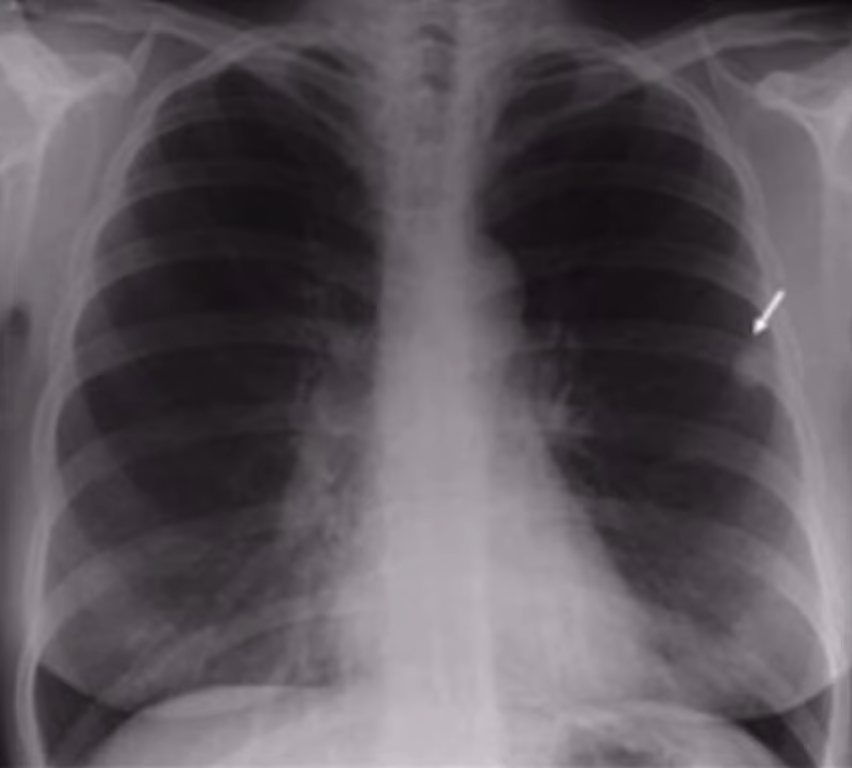
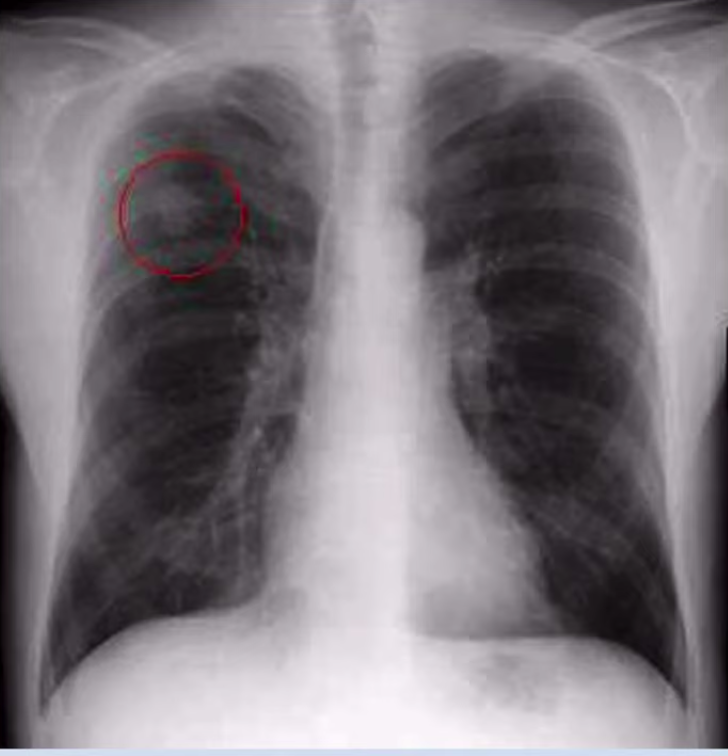
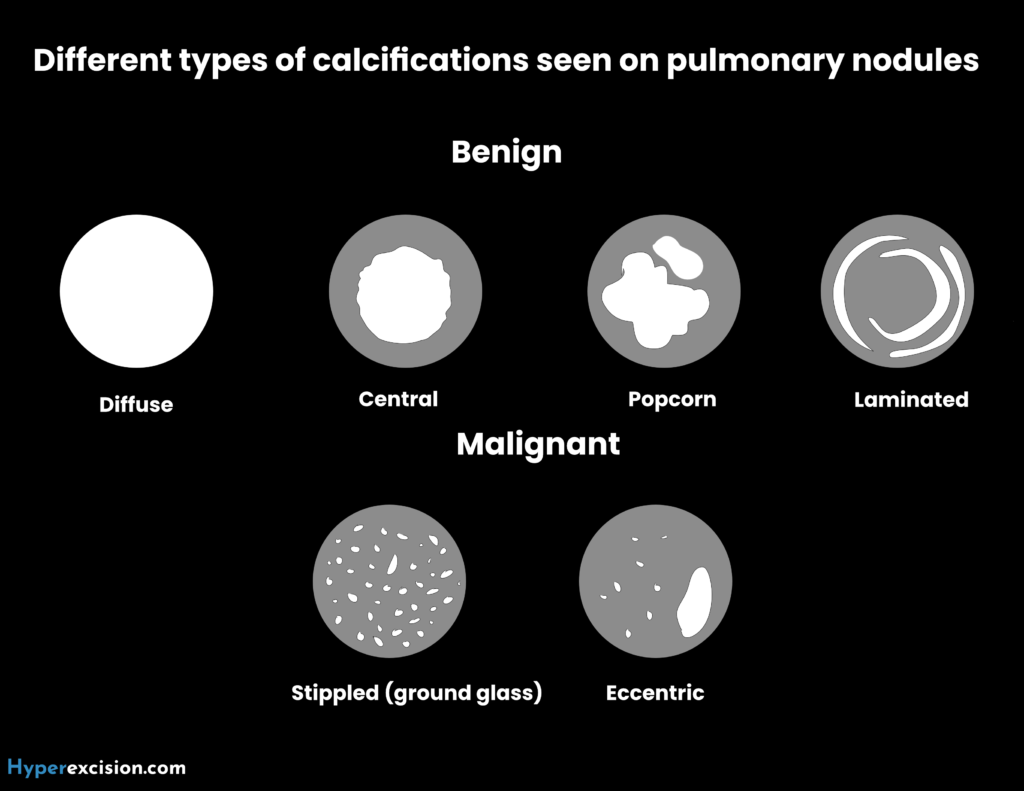
A solitary pulmonary nodule as indicated by a white arrow, most likely benign due to its characteristics. Source: https://www.youtube.com/@pwbMD/featuredA solitary pulmonary nodule as indicated by a red circle, most likely malignant due to its characteristics. Source: https://www.youtube.com/@pwbMD/featuredDifferent types of calcifications seen on pulmonary nodules
Most accurate test: Biopsy
For peripheral lesions: Transthoracic biopsy, or video-assisted thorascopic surgery
Eligibility for surgery: pulmonary function tests are necessary. Best if FEV >2 L/s. Resections include wedge, segment, lobe, and unilateral pneumonectomy.
Staging is required to determine optimum treatment.
Surgical resection with curative intent is reserved in patients with early-stage disease. Adjunct therapy is used for more extensive disease.
Prevention
Primary prevention: aimed mostly toward the younger population, to prevent them to start smoking
For smoking addicts, various smoking cessation measures can be attempted.
To provide the best experiences, we use technologies like cookies to store and/or access device information. Consenting to these technologies will allow us to process data such as browsing behavior or unique IDs on this site. Not consenting or withdrawing consent, may adversely affect certain features and functions.
Functional
Always active
The technical storage or access is strictly necessary for the legitimate purpose of enabling the use of a specific service explicitly requested by the subscriber or user, or for the sole purpose of carrying out the transmission of a communication over an electronic communications network.
Preferences
The technical storage or access is necessary for the legitimate purpose of storing preferences that are not requested by the subscriber or user.
Statistics
The technical storage or access that is used exclusively for statistical purposes.The technical storage or access that is used exclusively for anonymous statistical purposes. Without a subpoena, voluntary compliance on the part of your Internet Service Provider, or additional records from a third party, information stored or retrieved for this purpose alone cannot usually be used to identify you.
Marketing
The technical storage or access is required to create user profiles to send advertising, or to track the user on a website or across several websites for similar marketing purposes.