Your first week of Hyperexcision Scholar (Q-bank) is on us. Just use code TRIAL250 at checkout when you purchase the 1-week access and you are sorted. DismissSkip to content
Overview The management of preterm prelabour rupture of membranes and prelabour rupture of membranes depends on weighing the risk of fetal neonatal complications, whether the patient is in labor or not, evidence of sepsis, and the prospect of fetal survivial…
Placenta accreta spectrum Placenta accreta is a condition whereby the placenta attatches too deeply into the uterine wall. It is characterized by obliteration of Nitabuch’s fibrinoid layer, which acts as a barrier to trophoblastic invasion beyond the decidua. The principles…
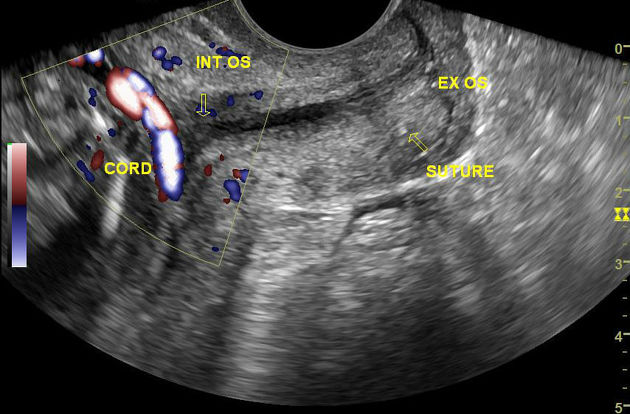
Vasa previa Vasa previa is a very rare condition where the fetal placental vessels cross the internal cervical os. It can be easily diagnosed via ultrasound with a color doppler.
Uterine rupture Uterine rupture is complete separation of the wall of the uterus i.e separation of the myometrium and perimetrium. When the perimetrium remains intact, it is called uterine dehiscence or incomplete rupture. Uterine rupture is more commonly associated with…
Abruptio placentae Abruptio placentae is premature separation of the placenta from the uterus. Abruption is difficult to pick up through ultrasound, but it is still done to rule out placenta and vasa previa. The preferable mode of delivery in case…
Placenta previa Placenta previa is a common condition in which the placenta lies in the lower segment of the uterus. The placenta may avulse from the uterine wall as the lower segment begins to stretch at 28 weeks, classically resulting…
Overview Gestational trophoblastic disease is the presence of abnormal tissue derived from fetal cells. These are also known as molar pregnancies or hydatidiform moles. hCG mimics TSH, LH and FSH Classification of Gestational Trophoblastic Disease Classification Example Benign (75%) Complete…
Ectopic Pregnancy An ectopic pregnancy occurs when the embryo implants somewhere other than the endometrial cavity (95% in the fallopian tubes of which 70% occur in the tubal ampulla). A clinical triad of abdominal pain, vaginal bleeding and a pelvic…
Abortion Miscarriage (abortion) is defined as termination of pregnancy before 24 weeks gestation OR when fetal weight is estimated to be < 500g. The most common cause of pregnancy loss in the first trimester is fetal genetic abnormalities (aneuploidies e.g.…
Overview Early pregnancy bleeding is per vaginal bleeding before viability (WHO < 20 weeks gestation date or < 500 g fetal weight) Approximately 25% of pregnancie s experience bleeding in the first trimester. Most women need to be reassured since…