Hypoglycaemia occurs when glucose concentration falls below 3.3 mmol The threshold for the onset of hypoglycemic symptoms varies with patients. Severe symptomatic hypoglycemia occurs in most adults at blood glucose levels ≤ 2.2-2.8 mmol Hypoglycemia in patients with diabetes is…
Hyperosmolar hyperglycemic state (HHS) commonly occurs in patients with type 2 diabetes who have concomitant illnesses, which cause reduced fluid intake. It is characterized by extreme hyperglycemia and hyperosmolarity without significant ketosis. The mortality rate is higher for HHS than…
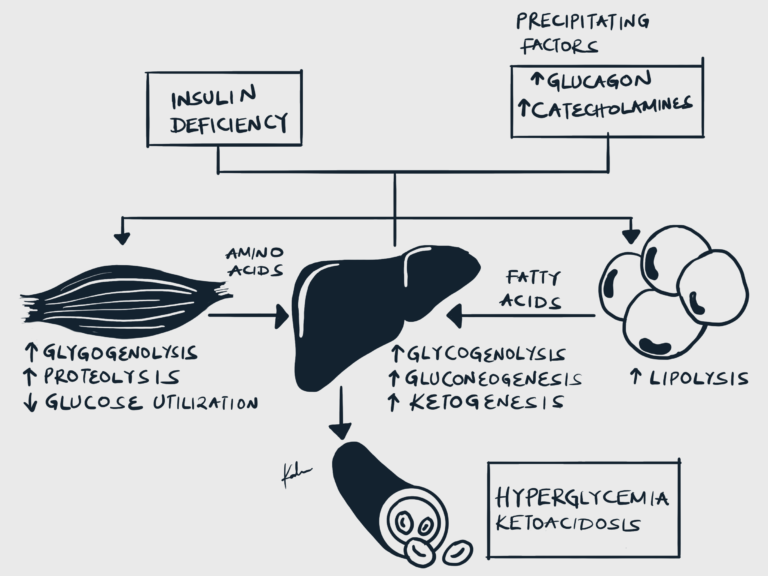
DKA is an acute, major life-threatening complication of Diabetes characterized by hyperglycemia, ketoacidosis, and ketonuria. It occurs when there is absolute or relative insulin deficiency, which inhibits glucose entry into the cell. The liver then rapidly produces ketones as an…
The main goal of treating diabetes is to minimise the probability of complications while maximising the patient’s quality of life. When a new diagnosis of T2DM is made, a determination of how the patient is treated is based primarily on…
Diabetes can be screened using an HbA1C level, fasting plasma glucose, or an Oral Glucose Tolerance Test (OGTT). If fasting plasma glucose is used alone for screening, ≥ 2 abnormal readings are required to make the diagnosis. An HbA1C level…
Type 2 diabetes mellitus (T2DM) is a chronic metabolic disorder characterised by insulin resistance and impaired insulin secretion leading to hyperglycaemia. It peaks between 60 and 70 years and is more common in men. Screening for type 2 diabetes Diagnosis…
Type 1 diabetes mellitus (T1DM) is a chronic autoimmune disease caused by the destruction of insulin-producing pancreatic beta cells. This results in absolute insulin deficiency and hyperglycaemia. It commonly presents in childhood and adolescence with the triad of polyuria, polydipsia…
Systemic sclerosis is a chronic autoimmune connective tissue disease characterised by skin fibrosis (scleroderma), fibrosis of the internal organs, vasculopathy, and immune system dysregulation. It is more common in women and peaks between 60 and 70 years. Classification Classification Description…
Sjögren’s syndrome is a chronic autoimmune disorder characterized by lymphocytic infiltration and fibrosis of exocrine glands; it primarily affects the salivary and lacrimal glands. It affects women more than men (M: F 9:1) and peaks between 40 and 60 years. It is…
Bechet’s syndrome is a chronic multisystemic inflammatory disorder characterised by recurrent oral and genital ulcers, uveitis, and skin lesions. It is associated with HLA-B5. The diagnosis is clinical. It is more prevalent in countries along the Silk Road, from Eastern…