A 17-year-old male with newly diagnosed Burkitt lymphoma is admitted for induction chemotherapy. Two days after starting treatment, he develops nausea, vomiting, muscle cramps, and confusion. Vitals show tachycardia and mild hypotension.
His laboratory results: K⁺ 6.2 mmol/L, phosphate 2.3 mmol/L, uric acid elevated, calcium 1.6 mmol/L, and creatinine elevated.
Q1. What is the diagnosis?
Tumour lysis syndrome
Tumour lysis syndrome is a combination of electrolyte derangements and acute kidney injury in patients with cancer due to massive cell lysis
It commonly occurs after chemotherapy and radiotherapy
Spontaneous tumour lysis syndrome (from necrosis) can also occur, but it is less common
Q2. What are the subtypes of tumour lysis syndrome?
Category Description Laboratory tumour lysis syndrome Abnormality in 2 or more laboratory measurements 3 – 7 days after chemotherapy. Clinical tumour lysis syndrome Laboratory abnormalities and ≥ 1 clinical syndrome (arrhythmia , seizure , serum creatinine 1.5 times the upper limit of normal)
Q3. What lab abnormalities are present in tumour lysis syndrome
Hyperkalemia
Hyperphosphataemia
Hypocalcaemia
Hyperuricaemia
Acute kidney injury
Q4. Which malignancies are commonly associated with tumour lysis syndrome?
Acute lymphoblastic leukaemia
Acute myeloid leukemia (WBC > 25k)
Non-Hodgkin lymphoma (Burkitt lymphoma )
Multiple myeloma
Other solid tumours, e.g. breast, gastrointestinal and prostate cancer, can also cause tumour lysis syndrome
Q5. Explain the pathophysiology of tumour lysis syndrome
Rapid tumour cell lysis releases intracellular potassium , phosphate , and nucleic acids → this causes hyperkalemia , hyperphosphatemia and secondary hypocalcemia , and hyperuricemia → acute kidney injury
Acute kidney injury can further exacerbate hypercalcemia
Hypocalcemia increases the risk of seizures
Q6. What are the risk factors for tumour lysis syndrome
Large tumor burden
Increased white cell count
Pre-treatment elevated uric acid
Pre-treatment LDH > 2X upper limit of normal
Chronic kidney disease
Volume depletion
Specific chemotherapeutics
Q7. How can tumour lysis syndrome be prevented?
Aggressive IV hydration during therapy : 2 – 3 L/m2/day (150 – 200 ml/h for an average-sized adult)
Hypouricemic agent before cancer therapy:
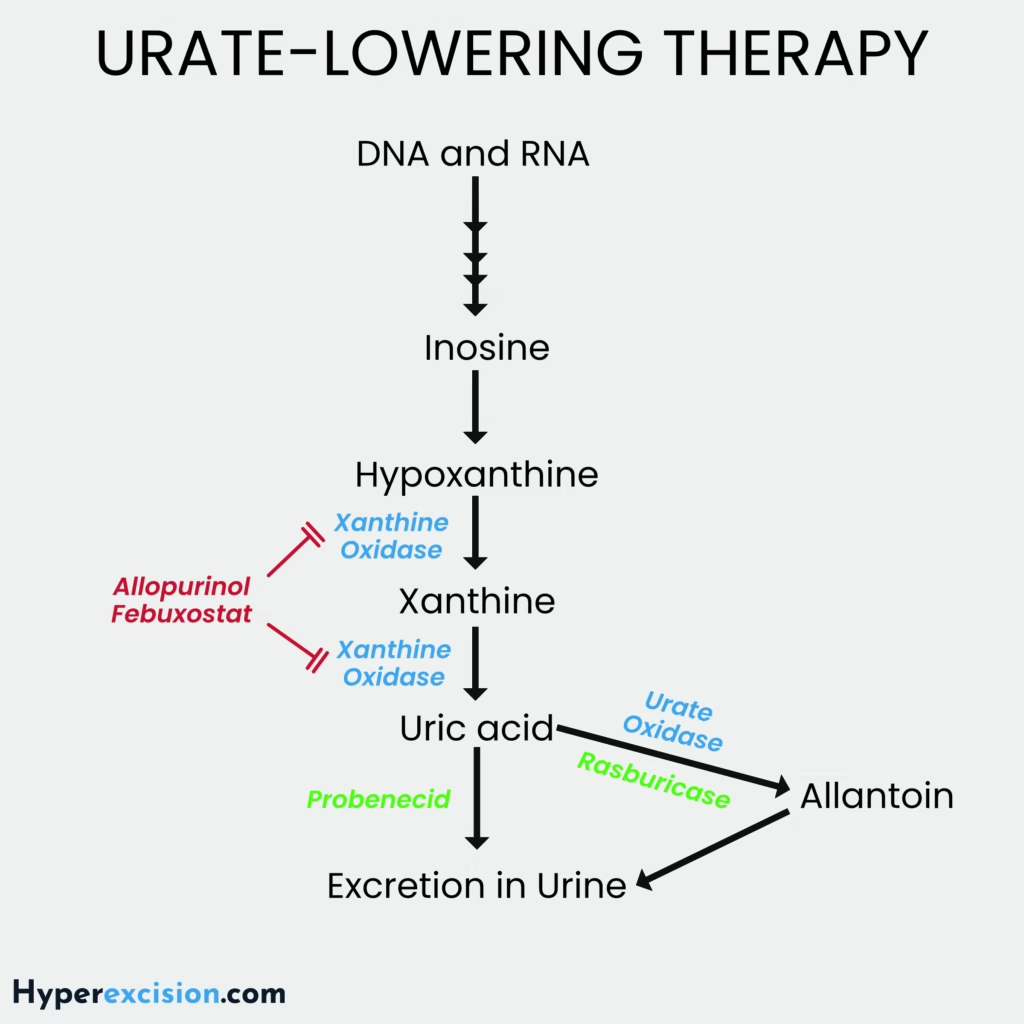
Xanthine oxidase inhibitors, e.g. allopurinol, febuxostat, for low-medium risk patients
Recombinant uricase (rasburicase) for high-risk patients
Frequently monitor labs and urine output
Prevention is the best treatment
Allopurinol/febuxostat inhibit xanthine oxidase but cause accumulation of xanthine, which may be nephrotoxic
Rasburicase is a recombinant uricase which breaks down uric acid to allantoin, which is more readily excreted
Urate-lowering therapy
Q8. What is the treatment once tumour lysis syndrome has developed?
Continue aggressive IV fluid therapy
Start rasburicase
Aggressive management of hyperkalemia and hyperphosphataemia
Non-aggressive management of hypocalcemia in an asymptomatic patient (to prevent precipitation of calcium phosphate)
Renal replacement therapy
Biochemistry
ACTH P: <80 ng/L
ALT P: 5–35 U/L
Albumin P: 35–50 g/L
Aldosterone P: 100–500 pmol/L
Alk. phosphatase P: 30–130 U/L
α-Amylase P: 0–180 IU/dL
α-Fetoprotein S: <10 kU/L
Angiotensin II P: 5–35 pmol/L
ADH P: 0.9–4.6 pmol/L
AST P: 5–35 U/L
Bicarbonate P: 24–30 mmol/L
Bilirubin P: 3–17 μmol/L
BNP P: <50 ng/L
CRP P: <10 mg/L
Calcitonin P: <0.1 mcg/L
Calcium (ionized) P: 1.0–1.25 mmol/L
Calcium (total) P: 2.12–2.60 mmol/L
Chloride P: 95–105 mmol/L
Cholesterol P: <5.0 mmol/L
VLDL P: 0.128–0.645 mmol/L
LDL P: <2.0 mmol/L
HDL P: 0.9–1.93 mmol/L
Cortisol AM P: 450–700 nmol/L
Cortisol Midnight P: 80–280 nmol/L
CK ♂ P: 25–195 U/L
CK ♀ P: 25–170 U/L
Creatinine P: 70–100 μmol/L
Ferritin P: 12–200 mcg/L
Folate S: 2.1 mcg/L
FSH P: 2–8 U/L ♂; >25 menopause
GGT ♂ P: 11–51 U/L
GGT ♀ P: 7–33 U/L
Glucose (fasting) P: 3.5–5.5 mmol/L
Growth hormone P: <20 mu/L
HbA1C (DCCT) B: 4–6%
HbA1C (IFCC) B: 20–42 mmol/mol
Iron ♂ S: 14–31 μmol/L
Iron ♀ S: 11–30 μmol/L
Lactate (venous) P: 0.6–2.4 mmol/L
Lactate (arterial) P: 0.6–1.8 mmol/L
LDH P: 70–250 U/L
LH P: 3–16 U/L
Magnesium P: 0.75–1.05 mmol/L
Osmolality P: 278–305 mosmol/kg
PTH P: 0.8–8.5 pmol/L
Potassium P: 3.5–5.3 mmol/L
Prolactin ♂ P: <450 U/L
Prolactin ♀ P: <600 U/L
PSA P: 0–4 mcg/mL
Protein (total) P: 60–80 g/L
Red cell folate B: 0.36–1.44 μmol/L
Renin (erect) P: 2.8–4.5 pmol/mL/h
Renin (recumbent) P: 1.1–2.7 pmol/mL/h
Sodium P: 135–145 mmol/L
TBG P: 7–17 mg/L
TSH P: 0.5–4.2 mU/L
T4 P: 70–140 nmol/L
Free T4 P: 9–22 pmol/L
TIBC S: 54–75 μmol/L
Triglycerides P: 0.50–2.3 mmol/L
T3 P: 1.2–3.0 nmol/L
Troponin T P: <0.1 mcg/L
Urate ♂ P: 210–480 μmol/L
Urate ♀ P: 150–390 μmol/L
Urea P: 2.5–6.7 mmol/L
Vitamin B12 S: 0.13–0.68 nmol/L
Vitamin D S: 50 nmol/L
Arterial Blood Gases
pH 7.35–7.45
PaCO₂ 4.7–6.0 kPa
PaO₂ >10.6 kPa
Base excess ±2 mmol/L
Urine
Cortisol (free) <280 nmol/24h
Hydroxyindole acetic acid 16–73 μmol/24h
Hydroxymethylmandelic acid 16–48 μmol/24h
Metanephrines 0.03–0.69 μmol/mmol cr.
Osmolality 350–1000 mosmol/kg
17-Oxogenic steroids ♂ 28–30 μmol/24h
17-Oxogenic steroids ♀ 21–66 μmol/24h
17-Oxosteroids ♂ 17–76 μmol/24h
17-Oxosteroids ♀ 14–59 μmol/24h
Phosphate (inorganic) 15–50 mmol/24h
Potassium 14–120 mmol/24h
Protein <150 mg/24h
Protein/creatinine ratio <3 mg/mmol
Sodium 100–250 mmol/24h
Haematology
WCC 4.0–11.0 ×10⁹/L
RBC ♂ 4.5–6.5 ×10¹²/L
RBC ♀ 3.9–5.6 ×10¹²/L
Hb ♂ 130–180 g/L
Hb ♀ 115–160 g/L
PCV ♂ 0.4–0.54 L/L
PCV ♀ 0.37–0.47 L/L
MCV 76–96 fL
MCH 27–32 pg
MCHC 300–360 g/L
RDW 11.6–14.6%
Neutrophils 2.0–7.5 ×10⁹/L (40–75%)
Lymphocytes 1.0–4.5 ×10⁹/L (20–45%)
Eosinophils 0.04–0.44 ×10⁹/L (1–6%)
Basophils 0–0.10 ×10⁹/L (0–1%)
Monocytes 0.2–0.8 ×10⁹/L (2–10%)
Platelets 150–400 ×10⁹/L
Reticulocytes 0.8–2.0% / 25–100 ×10⁹/L
Prothrombin time 10–14 s
APTT 35–45 s
Paediatric
Pulse Rate (bpm)
Neonate 140–160
Infant <1yr 120–140
1–5 years 110–130
5–12 years 80–120
>12 years 70–100
Respiratory Rate (tachypnoea)
0–2 months ≥60/min
2–12 months ≥50/min
1–5 years ≥40/min
>5 years ≥30/min
Blood Pressure (mmHg)
Term 65/45
1 year 75/50
4 years 85/60
8 years 95/65
10 years 100/70
Weight Formulas
3–12 months (a + 9)/2 kg
1–6 years 2a + 8 kg
>6 years (7a − 5)/2 kg
Haemoglobin (g/dL)
Term newborn 13–20
1 month 11–18
2 months 10–15
1–2 years 10–13
>2 years 11–14
MUAC (6 months–5 years)
Obese >17.5 cm
Normal 13.5–17.4 cm
At risk 12.5–13.4 cm
Moderate malnutrition 11.5–12.4 cm
Severe malnutrition <11.5 cm
Developmental Milestones
Social smile 1.5 months
Head control 4 months
Sits unsupported 7 months
Crawls 10 months
Stands unsupported 10–12 months
Walks 12–13 months
Talks 18 months
CSF WBC (/mm³)
Term newborn 0–25
>2 weeks 0–5