Last updated: November 11, 2024

Overview

  • Investigations for vaginal discharge/irritation
    • Speculum exam
    • Vaginal swab
      • Vaginal pH
      • Vaginal KOH prep
      • Wet mount (of vaginal secretions)
      • Whiff test
      • NAAT for chlamydia and gonorrhea
TrichomoniasisCandida vaginitisBacterial vaginosis
Physical ExamErythema and irritationErythema and irritationUnremarkable
DischargeYellow-green, malodorousCottage-cheese” likeGray/White, “fishy
Wet mount“Motile, flagellated protozoaNothingClue cells
KOH prepNothingPseudohyphae, spores+ whiff test
pHElevated (> 4.5)Normal (4.0 – 4.5)Elevated (> 4.5)
Treatment (non-pregnant)MetronidazoleTopical or PO antifungalMetronidazole
Treatment (pregnant)MetronidazoleTopical antifungalMetronidazole
ComplicationsPreterm birth, Low Birth Weight, PROMNonePreterm birth, Low Birth Weight, PROM

**normal vaginal discharge (**white, mucoid)

Trichomoniasis

Trichomoniasis is the most prevalent non-viral STD. Trichomonas has a predilection for epithelial cells. Most cases are asymptomatic. Men carry Trichomonads (upto 70% who have female partners with trichomoniasis) but are not affected. Trichomoniasis is a clinical marker for high-risk sexual activity and has a high co-incidence of infection with other STDs. Vertical transmission is posisble but rare

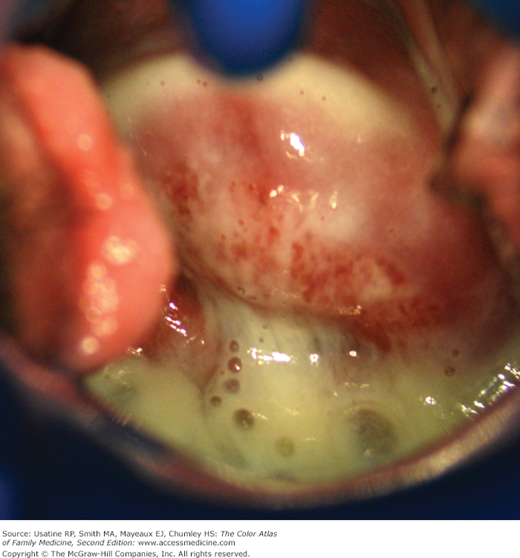
Greenish, frothy discharge of trichomoniasis with “strawberry”cervix
  • Signs and symptoms
    • Foul, thin yellow-green discharge
    • Dysuria
    • Dyspareunia
    • Vulvar itching and burning
    • Cervicitis may be present (can mimic chlamydial or gonococcal infection)
  • Physical examination
    • Erythematous, edematous vulva
    • Excoriation
    • “Strawbery spots”
  • Investigation
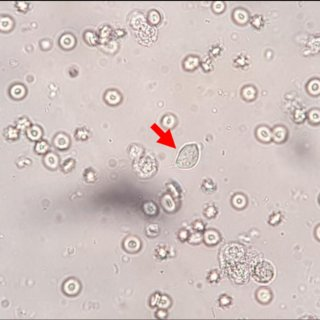
    • Saline prep: Motile trichomonads
    • Vaginal pH: Elevated (> 4.5)
    • Rapid Antigen Detection Tests
  • Treatment
    • Metronidazole
    • Test for other STDs
    • Refer sexual contacts for Metronidazole
Trichomonad on saline prep

Candida Vaginitis

Candida vaginitis is not an STD but risk increases with sexual contact. C. albicans is the most implicated pathogens but other Candida species can cause it.

Candida on KOH prep
Candida on KOH prep
  • Risk factors
  • Signs and symptoms
    • Cottage-cheese-like or “curdy”discharge
    • Vulvar/vaginal itching and burning
  • Physical examination
    • Erythematous, edematous vulva
    • Excoriation
  • Investigations
    • 10% KOH prep: buds and hyphae
    • Vaginal pH: normal (4.0 – 4.5)
  • Criteria for complicated candida vaginitis
    • Recurrent (≥ 4 cases per year)
    • Severe
    • Non-albicans infection
    • Diabetic, Immunosuppressed, Debilitated or Pregnant
  • Treatment of uncomplicated candida vaginitis
    • Topical azole (Miconazole, Clotrimazole)
  • Treatment of complicated candida vaginitis
    • Recurrent: Prolonged PO Fluconazole
    • Pregnant: Nystatin vaginal tablets
    • Non-albicans: Boric acid vaginal capsules
Cottage-cheese like discharge in candida vaginitis

Bacterial Vaginosis

Bacterial vaginosis is a disturbance in the normal vaginal flora. It is a disturbance, not inflammatory, and not an STD**.**

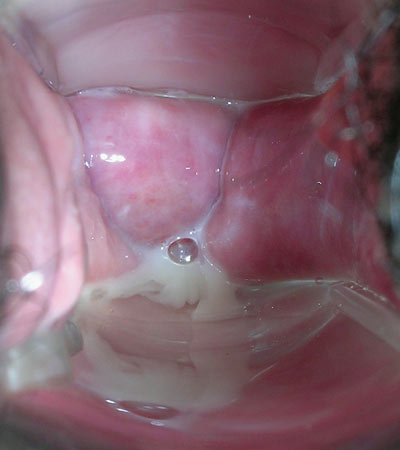
Homogenous white discharge in bacterial vaginosis
  • Risk factors
    • Vaginal douching
    • Oral sex
    • Sex during menses
    • New or multiple sex partners
    • Early sexual debut
    • Sexual activity with other women
    • IUD placement
    • Smoking
  • Signs and symptoms
    • “Fishy” grey vaginal discharge without vaginal discomfort
  • Physical exam
    • Unremarkable
    • Adherent gray discharge
  • Investigations
    • Saline prep: “Clue cells”
    • Positive amine “whiff”” test (after adding KOH to the discharge sample)
    • Elevated vaginal pH
  • Treatment
    • Metronidazole
clue cell
clue cell
Reference Intervals
Biochemistry
ACTHP: <80 ng/L
ALTP: 5–35 U/L
AlbuminP: 35–50 g/L
AldosteroneP: 100–500 pmol/L
Alk. phosphataseP: 30–130 U/L
α-AmylaseP: 0–180 IU/dL
α-FetoproteinS: <10 kU/L
Angiotensin IIP: 5–35 pmol/L
ADHP: 0.9–4.6 pmol/L
ASTP: 5–35 U/L
BicarbonateP: 24–30 mmol/L
BilirubinP: 3–17 μmol/L
BNPP: <50 ng/L
CRPP: <10 mg/L
CalcitoninP: <0.1 mcg/L
Calcium (ionized)P: 1.0–1.25 mmol/L
Calcium (total)P: 2.12–2.60 mmol/L
ChlorideP: 95–105 mmol/L
CholesterolP: <5.0 mmol/L
VLDLP: 0.128–0.645 mmol/L
LDLP: <2.0 mmol/L
HDLP: 0.9–1.93 mmol/L
Cortisol AMP: 450–700 nmol/L
Cortisol MidnightP: 80–280 nmol/L
CK ♂P: 25–195 U/L
CK ♀P: 25–170 U/L
CreatinineP: 70–100 μmol/L
FerritinP: 12–200 mcg/L
FolateS: 2.1 mcg/L
FSHP: 2–8 U/L ♂; >25 menopause
GGT ♂P: 11–51 U/L
GGT ♀P: 7–33 U/L
Glucose (fasting)P: 3.5–5.5 mmol/L
Growth hormoneP: <20 mu/L
HbA1C (DCCT)B: 4–6%
HbA1C (IFCC)B: 20–42 mmol/mol
Iron ♂S: 14–31 μmol/L
Iron ♀S: 11–30 μmol/L
Lactate (venous)P: 0.6–2.4 mmol/L
Lactate (arterial)P: 0.6–1.8 mmol/L
LDHP: 70–250 U/L
LHP: 3–16 U/L
MagnesiumP: 0.75–1.05 mmol/L
OsmolalityP: 278–305 mosmol/kg
PTHP: 0.8–8.5 pmol/L
PotassiumP: 3.5–5.3 mmol/L
Prolactin ♂P: <450 U/L
Prolactin ♀P: <600 U/L
PSAP: 0–4 mcg/mL
Protein (total)P: 60–80 g/L
Red cell folateB: 0.36–1.44 μmol/L
Renin (erect)P: 2.8–4.5 pmol/mL/h
Renin (recumbent)P: 1.1–2.7 pmol/mL/h
SodiumP: 135–145 mmol/L
TBGP: 7–17 mg/L
TSHP: 0.5–4.2 mU/L
T4P: 70–140 nmol/L
Free T4P: 9–22 pmol/L
TIBCS: 54–75 μmol/L
TriglyceridesP: 0.50–2.3 mmol/L
T3P: 1.2–3.0 nmol/L
Troponin TP: <0.1 mcg/L
Urate ♂P: 210–480 μmol/L
Urate ♀P: 150–390 μmol/L
UreaP: 2.5–6.7 mmol/L
Vitamin B12S: 0.13–0.68 nmol/L
Vitamin DS: 50 nmol/L
Arterial Blood Gases
pH7.35–7.45
PaCO₂4.7–6.0 kPa
PaO₂>10.6 kPa
Base excess±2 mmol/L
Urine
Cortisol (free)<280 nmol/24h
Hydroxyindole acetic acid16–73 μmol/24h
Hydroxymethylmandelic acid16–48 μmol/24h
Metanephrines0.03–0.69 μmol/mmol cr.
Osmolality350–1000 mosmol/kg
17-Oxogenic steroids ♂28–30 μmol/24h
17-Oxogenic steroids ♀21–66 μmol/24h
17-Oxosteroids ♂17–76 μmol/24h
17-Oxosteroids ♀14–59 μmol/24h
Phosphate (inorganic)15–50 mmol/24h
Potassium14–120 mmol/24h
Protein<150 mg/24h
Protein/creatinine ratio<3 mg/mmol
Sodium100–250 mmol/24h
Haematology
WCC4.0–11.0 ×10⁹/L
RBC ♂4.5–6.5 ×10¹²/L
RBC ♀3.9–5.6 ×10¹²/L
Hb ♂130–180 g/L
Hb ♀115–160 g/L
PCV ♂0.4–0.54 L/L
PCV ♀0.37–0.47 L/L
MCV76–96 fL
MCH27–32 pg
MCHC300–360 g/L
RDW11.6–14.6%
Neutrophils2.0–7.5 ×10⁹/L (40–75%)
Lymphocytes1.0–4.5 ×10⁹/L (20–45%)
Eosinophils0.04–0.44 ×10⁹/L (1–6%)
Basophils0–0.10 ×10⁹/L (0–1%)
Monocytes0.2–0.8 ×10⁹/L (2–10%)
Platelets150–400 ×10⁹/L
Reticulocytes0.8–2.0% / 25–100 ×10⁹/L
Prothrombin time10–14 s
APTT35–45 s
Paediatric
Pulse Rate (bpm)
Neonate140–160
Infant <1yr120–140
1–5 years110–130
5–12 years80–120
>12 years70–100
Respiratory Rate (tachypnoea)
0–2 months≥60/min
2–12 months≥50/min
1–5 years≥40/min
>5 years≥30/min
Blood Pressure (mmHg)
Term65/45
1 year75/50
4 years85/60
8 years95/65
10 years100/70
Weight Formulas
3–12 months(a + 9)/2 kg
1–6 years2a + 8 kg
>6 years(7a − 5)/2 kg
Haemoglobin (g/dL)
Term newborn13–20
1 month11–18
2 months10–15
1–2 years10–13
>2 years11–14
MUAC (6 months–5 years)
Obese>17.5 cm
Normal13.5–17.4 cm
At risk12.5–13.4 cm
Moderate malnutrition11.5–12.4 cm
Severe malnutrition<11.5 cm
Developmental Milestones
Social smile1.5 months
Head control4 months
Sits unsupported7 months
Crawls10 months
Stands unsupported10–12 months
Walks12–13 months
Talks18 months
CSF WBC (/mm³)
Term newborn0–25
>2 weeks0–5
Calculator

Post Discussion

Your email address will not be published. Required fields are marked *