
Overview
The management of preterm prelabour rupture of membranes and prelabour rupture of membranes depends on weighing the risk of fetal neonatal complications, whether the patient is in labor or not, evidence of sepsis, and the prospect of fetal survivial if delivered in the hospital. Maternal morbidity should be considered especially if PPROM occurs remote from term.
Chorioamnionitis is a major complication of PROM/PPROM. The risk of chorioamnionitis is increased the earlier the gestational age and the longer the duration of rupture of membranes. Another potentially dangerous complication that occurs with rupture of membranes is cord prolapse
Digital vaginal examination is generally AVOIDED in patients with PROM/PPROM since it increases the risk of infection, does not aid in diagnosis, and may shorten time to delivery. Drainage of liquour should be confirmed with a sterile speculum examination first. Digital examination may be done when delivery is imminent or for Bishop score if induction is planned within the next 24 hours.
| Term | Definition |
|---|---|
| Prelabor rupture of membranes (PROM) | Rupture of membranes prior to the onset of labor beyond 37 weeks of gestation |
| Preterm prelabor rupture of membranes (PPROM) | Rupture of membranes prior to the onset of labor beyond 28 weeks but before 37 weeks of gestation |
| Prolonged rupture of membranes | Rupture of membranes occuring more than 18 hours before delivery |
Features suggestive of drainage of liquour (DOL)
| Component | Feature suggestive of drainage of liquor |
|---|---|
| History | Fluid draining to the legs or soaking beddings or the seats |
| Sterile speculum examination | Pooling of fluid in the posterior fornix or fluid draining from the cervixal os |
| Fern and Nitrazine testing | Formation of a fern pattern of dried cervicovaginal fluid and/or vaginal sidewall or posterior fornix pH > 6.5 |
Risk factors for PROM and PPROM
| Category | Risk factors |
|---|---|
| Maternal risk factors | History of preterm birth or PROM, family history of PROM, genitourinary tract infection, cervical insufficiency, low socieconomic status, nutritional deficiency (especially copper and ascorbic acid), cigarette smoking, underweight, polyhydramnios, antepartum hemorrhage, invasive procedure e.g. amniocentesis |
| Fetal risk factors | Multiple pregnancy, presence of fetal fibronectin, fetal malformations, intrauterine fetal demise |
| Obstetric risk factors | Polyhydramnios, antepartum hemorrhage, chorioamnionitis |
| Iatrogenic or external risk factors | History of trauma, amniocentesis, fetal blood sampling, cervical cone biopsy |
- Patient History
- LMP and regularity of the cycles (management depends heavily on accurate gestation)
- History of a similar episode in a previous pregnancy
- Duration of drainage and amount of fluid (every second counts for development of infection)
- Pattern of fetal movements (alterations may point to cord compression or prolapse)
- Presence of other risk factors for PROM/PPROM (family history, infection, cigarette smoking, iatrogenic procedures, trauma, etc.)
- Signs and symptoms of PROM/PPROM
- Drainage of liquor: Gush of fluid or heavy discharge of watery vaginal fluid
- May reach the legs or soak bedding
- May be clear, green, yellow or brown
- May be foul smelling (if infection is present)
- May leak through out when walking or standing or lying down
- Associated with fever (if chorioamnionitis)
- Associated with reduced fetal movements
- Drainage of liquor: Gush of fluid or heavy discharge of watery vaginal fluid
- Physical exam findings in PROM/PPROM
- Fever (complicated with chorioamnionitis)
- Abdominal tenderness (complicated with chorioamnionitis)
- Fundal height smaller than gestation
- Vulva is soaked with amniotic fluid on digital vaginal exam
- Pooling of amniotic fluid in the posterior fornix
- Findings on pelvic examination + sterile speculum examination
- Fluid dripping out over posterior fourchette on inspection of the vulva
- Pooling of fluid in the posterior fornix
- Cervical dilatation
- Rule out cord prolapse (if cervix is open)
- Valsava maneuvre for active drainage
- Aspirate fluid from posterior fornix for culture and sensitivity, ferning and nitrazine test
- Differentials for drainage of liquor
- Urinary incontinence
- Leucorrhoea (excessive vaginal discharge)
- Vulvovaginitis (Florid Candidiasis, Bacterial vaginosis, Trichomoniasis): whitish “cottage-cheese like” discharge in candidiasis, vulval pruritus
- Semen
- Hydrorrhea gravidarum: periodic watery discharge in pregnancy probably due to excessive decidual glandular secretion
- Investigations
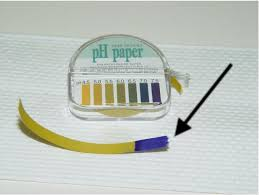
- pH test by LitmusorNitrazine paper: positive (pH > 7.1; turns paper blue)
- Nitrazine paper turns from yellow to blue at pH > 6
- Liquor, blood, or semen
- Fern test: positive (cervical mucus has ferning pattern under microscope)
- Fibronectin: positive fibronectin means imminent labor
- Amniotic fluid for MCS and maturity: Sample can be taken by amniocentesis or aspirated from the posterior fornix.
- High vaginal swab for MCS: GBS and bacterial vaginosis.
- Obstetric ultrasound
- Demonstrate viability
- Determine amount of liquor amnii (for oligohydraminos)
- Fetal anomalies
- Fetal heart rate (tachycardia may indicate intrauterine infection)
- Urinalysis: for protein and suger
- Other tests: Amnisure, Tampon test
- Lecithin sphingomyelin ratio of draining liquor: to assess fetal lung maturity
- Cardiotocography monitoring: make sure baby is OK (one of the complications of PROM is umbilical cord compression → variable decelerations)
- Cervical swab for culture: rule out gonorrhoea and chlamydia
- Recto-vaginal swab for cultures: rule out GBS
- Urinalysis and MCS urine: rule out UTI
- pH test by LitmusorNitrazine paper: positive (pH > 7.1; turns paper blue)
- Principles of Treatment of PROM/PPROM
- Antibiotic prophylaxis
- Corticosteroid for fetal lung maturity
- Planning delivery
- Monitor for infections/sepsis (tenderness and discharge, endocervical swabs, vitals and serial CRP)
- Indications for caesarean delivery in PROM/PPROM
- Non-reassuring feal status
- Placental abruption
- Malpresentation
- Extreme and Very preterm baby (to avoid Intraventricular hemorrage)
- Why would liquor stop draining in PROM/PPROM?
- Resealing of the membrane defect
- Oligohydramnios
- Cephalic presenting part seals cervical os (breech presenting babies might not seal the defect)
- Low valsava as patient rests
- Prevention of PROM/PPROM
- Progesterone supplementation
- Prevention and treatment of infections
- Use of condoms in the second half or pregnancy

Prelabor rupture of membranes (PROM)
Prelabour rupture of membranes (PROM) is the rupture of membranes prior to the onset of labor beyond 37 weeks. In PROM the membranes rupture before contractions and cervical change begins. PROM is classically described as a sudden gush of fluid from the vagina. The nitrazine test has a high negative predictive value for the diagnosis of PROM.
The principles of management of PROM includes antibiotic prophylaxis, planning for delivery, and monitoring for infections.
Membrane defect can spontaneously.
- Treatment
- Admit
- Put on bed rest and apply a sterile vulval pad to observe for further leakage
- Continuous fetal monitoring (Using Sonicaid, Kickcharts, Fetoscope or CTG)
- Monitor maternal vital signs (Pulse, Temperature q4h)
- Monitor uterine tenderness by palpation
- Antibiotic Treatment IV ampicillin and erythromycin for 2 days followed by PO amoxicillin and erythromycin for 5 days or PO erythromycin for 10 days
- Induce labor OR manage expectantly
Preterm Prelabor Rupture of Membranes (PPROM)
Preterm prelabor rupture of membranes is rupture of membranes prior to onset of labor before 37 weeks of gestation. Treatment depends on the gestational age. You have to weigh the risk of premature birth against the risk of neonatal/maternal infection. Antibiotics and corticosteroids can be given before fetal lung maturity (approximately 33 weeks). Delivery should take place no later than 34 weeks.
The principles of management of PPROM include antibiotic prophylaxis, corticosteroids for lung maturity, planning for delivery and monitoring for infection. Antibiotics are the same as for PROM.
Without intervention, 50% go into labor within 24 hours, 75% go into labor within 48 hours.
Treatment plan for PPROM
| Gestational age or condition | Delivery plan |
|---|---|
| < 23 weeks (previable) | Monitor (for membranes to reseal) or evacuate (abortion) |
| 24 – 31 weeks (remote) | Conservative management – admit, bed rest, sterile pad to monitor drainage of liquor, serial evaluation for infection, antibiotics, corticosteroids, and magnesium sulphate for neuroprotection |
| 32 – 33 weeks (near term) | Expectant management if fetal lungs are not mature – corticosteroids and antibiotics. Delivery once fetal lungs have matured |
| 34 – 36 weeks (near term) | Induce labour or deliver |
| Cerclage present | Early cerclage removal (retaining the cerclage does not increase latency from ruprue to delivery. |
Complications of PROM/PPROM
- Maternal complications if fetus remains in utero
- Chorioamnionitis
- Endomyometritis
- Sepsis
- Deep venous thrombosis (since they are on bed rest)
- Neonatal complications if fetus remains in utero
- Infection
- Sepsis
- Umbilical cord compression
- Pulmonary hypoplasia
- Neonatal complications of preterm delivery
- Respiratory distress syndrome
- Patent ductus arteriosus (any primi)
- Intraventricular hemorrhage (any primi)
- Cerebral palsy (complication of chorioamnionitis)
- Necrotizing enterocolitis
- Retinopathy of prematurity
- Bronchopulmonary dysplasia
- Complications of prolonged PPROM
- Chorioamnonitis
- Abruptio placentae
- Umbilical cord prolapse
Nota Bene
- What are the 3 major causes of neonatal death that are associated with PPROM?
- Prematurity
- Neonatal sepsis
- Pulmonary hypoplasia
- Why isn’t Augmentin recommended for patients with PPROM?
- Increases the risk of Necrotizing Enterocolitis in the noenate
- Why would you still give corticosteroids for patiets with PPROM past 34 weeks?
- To reduce the risk of developing necrotizing enterocolitis and intraventricular hemorrhage
- When are corticosteroids contraindicated in PPROM?
- Frank infection (may worsen the infection)
- Why isn’t misoprostol used in induction of labor in PPROM?
- Associated with increased risk of chorioamnionitis