
Overview
Purines are nitrogen-containing heterocyclic bases that form part of nucleotides. They have a double-ring structure (6-membered ring fused to a 5-membered ring)
- Two main purines (PUReAs Gold)
- Adenine (A)
- Guanine (G)
- Functions of purines
- Genetic information (DNA and RNA synthesis)
- Energy transfer (ATP, GTP)
- Cell signalling (cAMP, cGMP)
- Coenzymes (NAD+, FAD, CoA)
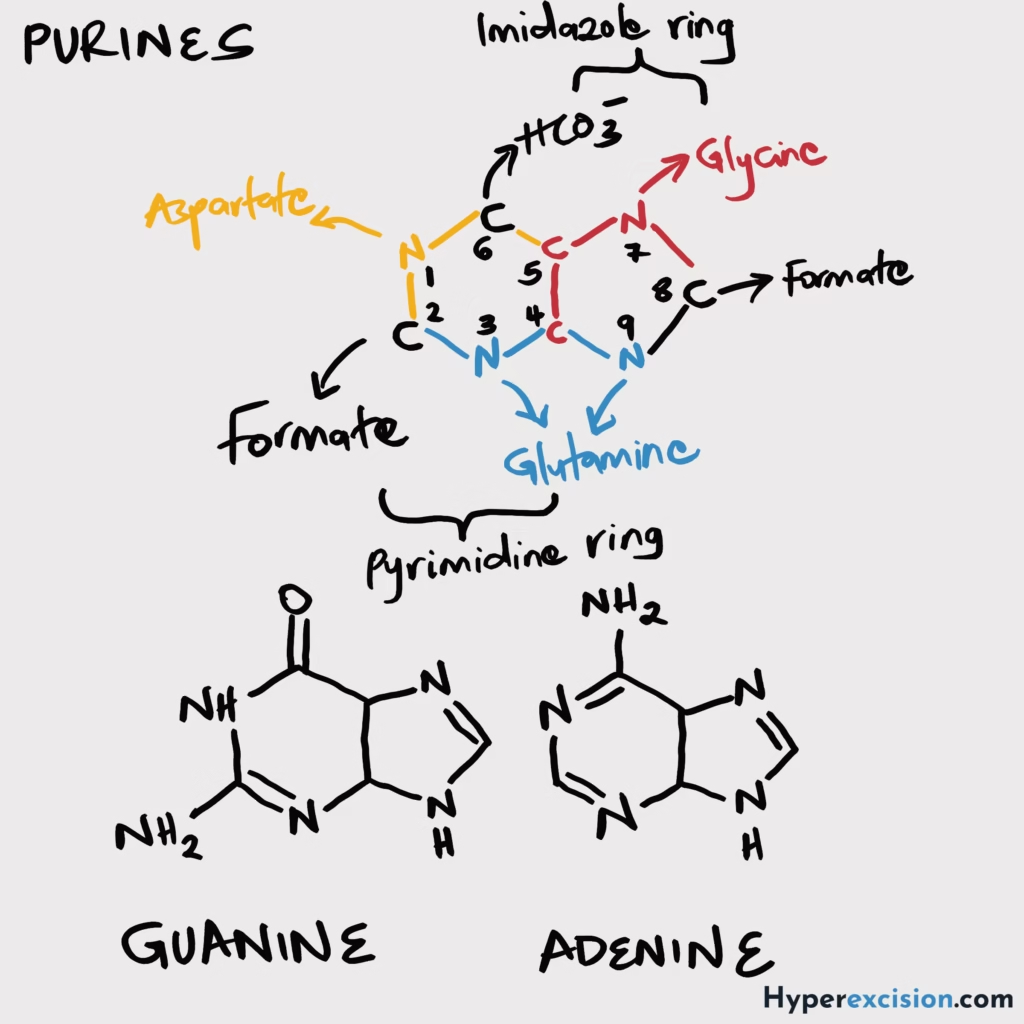
Precursors for de novo purine ring synthesis
| Precursor | Contribution |
|---|---|
| Glycine | C4, C5, N7 |
| Glutamine | N3, N9 |
| Aspartate | N1 |
| Formyl-THF | C2, C8 |
| CO₂ | C6 |
De Novo synthesis of purines
Purine synsthesis is the process where purine nucleotides (AMP and GMP) are made from scratch, mainly in the liver .
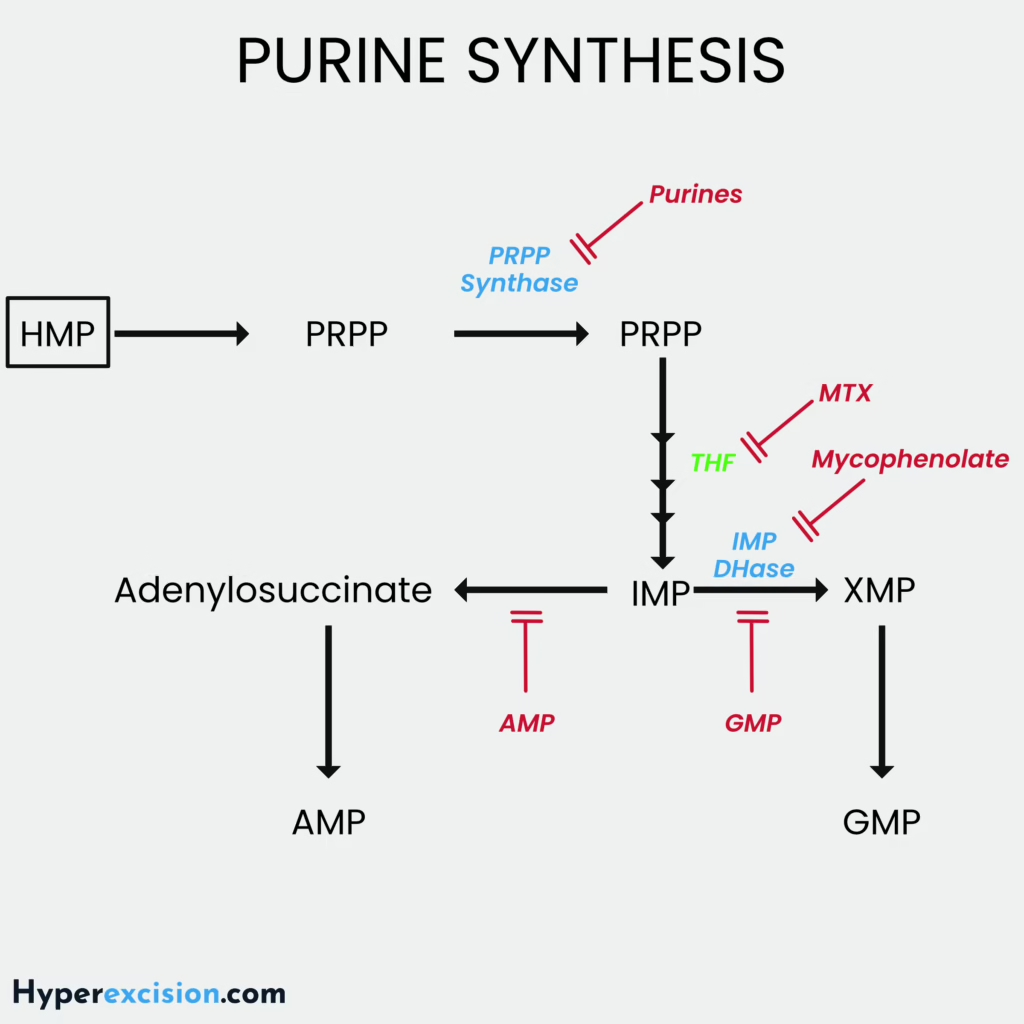
Purines are synthesised from Ribose-5-Phosphate, which is derived from the pentose phosphate pathway (Hexose monophosphate shunt).
Ribose-5-phosphate combines with ATP to form PRPP. This is the rate-limiting step for purine synthesis. PRPP undergoes several steps to be converted into IMP in a process mediated by folate (THF). During these steps, enzymes can be inhibited by sulfa drugs and methotrexate (methotrexate reduces the availability of tetrahydrofolate)
IMP can then be converted to GMP (through the intermediate XMP) or AMP (through the intermediate adenylosuccinate). GMP and AMP are the building blocks of RNA and DNA.
- Clinical implications
- Methotrexate: inhibits de novo purine synthesis by reducing the bioavailability of tetrahydrofolate. Methotrexate inhibits dihydrofolate reductase, which reduces the conversion of dihydrofolate to tetrahydrofolate. This is used in oncology (chemotherapy), rheumatology (rheumatoid arthritis, psoriasis), and ectopic pregnancy.
- Sulfa drugs (Sulfonamides) and trimethroprim: Sulfonamides inhibit dihydropteroate synthase while trimethroprim inhibits dihydrofolate reductase. These antibiotics reduce folate bioavailability in bacteria and indirectly reduce purine synthesis thus imparting their antimicrobial effects.
- Mycophenolate: inhibits IMP dehydrogenase blocking guanine nucleotide synthesis. This is used to prevent organt transplant rejection by T and b lymphocytes which rely entirely on de novo purine synthesis (selective immunosuppression and bone marrow suppression)
Degradation of purines
The final product of purine degradation is uric acid. Uric acid is poorly soluble and is excreted by the kidneys.
AMP can be degraded into IMP. IMP is converted to inosine.
AMP can also be broken down into adenosine, which is then converted to inosine by adenosine deaminase (ADA).
Inosine is converted into hypoxanthine.
Hypoxanthine is converted into xanthine by xanthine oxidase.
Xanthine is converted into uric acid by xanthine oxidase.
GMP is broken down into guanosine, then guanine.
Guanine is converted into xanthine by xanthine oxidase.
Xanthine is converted into uric acid by xanthine oxidase.
Summary of conversion of nucleotides to bases
AMP → adenosine → inosine → hypoxanthine
GMP → guanosine → guanine
Summary of conversion to uric acid
Hypoxanthine → xanthine → uric acid
Guanine → xanthine → uric acid
- Clinical implications
- ADA deficiency
- Gout: excess uric acid → monosodium urate (MSU) crystal deposition due to increased urate production (e.g. tumor lysis syndrome) or reduced urate excretion
- Allopurinol and febuxostat: inhibit xanthin oxidase
- Rasburicase: convers uric acid to allantoin
Salvage of purines
Salvage refers to the recycling of purines. It is more energy efficient than denovo synthesis and limits the produciton of uric acid.
Hypoxanthine-guanine phosphorybosyltransferase (HGPRT) converts hypoxanthine to IMP, and guanine to GMP. It uses PRPP as a ribose-phosphate donor
- Clinical implications
- Lesch-Nyhan Syndrome (HGPRT deficiency): X-linked recessive disorder. Deficient purine salvage causes increased PRPP → increased de novo purine synthesis, and increased uric acid.
