

Brain Death Criteria
In general, death can occur either by cardiac or brain death. Cardiac death is the irreversible cessation of circulatory and respiratory functions. Whereas brain death is the irreversible cessation of all functions of the entire brain, including the brainstem. Patients…
Neurological Examination
Presenting Complaints Overview of Physical Examination The following questions should be answered when performing a neurological examination: Note that specific examination exist form many neurological conditions including stroke, neuro-oncology, multiple sclerosis, ataxia e.t.c. This is out of scope but these…
Abdominal Examination
Presenting Complaints Physical Examination General Inspection Observe facial expression, body posture, and evidence of distress. Look for symmetry, color, and obvious masses and scars. Does the patient look generally sick? Sign Obvious signs of smoking bladder, esophageal, colorectal cancer Drip…
Respiratory System Examination
Presenting Complaints Physical Examination Is the patient in obvious respiratory distress? Is there cyanosis? Is there wasting? Does the patient use pursed lips when breathing? Is the patient on oxygen/nebulizer/inhaler/drip? Does the patient have pallor/cyanosis? General Inspection Look for a…
Cardiovascular System Examination
Presenting complaints Physical Examination Introduce yourself, obtain consent to examine and position the patient recumbent at 45 degrees. Expose to the waist and explain what you’re doing. Inspection General inspection Is the patient in pain or respiratory distress? Assess their…
History Taking
Presenting the patient Presenting Complaint Review of Systems Past History OBGYN History Sexual History Psychiatric History

Viral Hepatitis
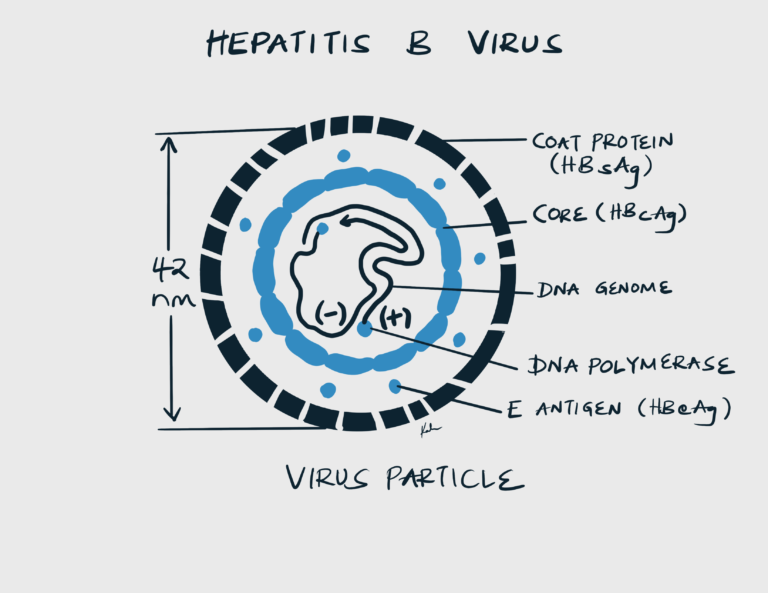
Viral hepatitis is a viral infection of the liver. It is most commonly caused by the hepatitis virus, but other viruses e.g. CMV, EBV and Yellow Fever can cause hepatitis. There are 5 types of hepatitis virus: Hepatitis A Virus…