Last updated:
November 12, 2024
- Name the layers of the epidermis and state the key histological features of each layer
- Stratum basale: Mitotically active cells – stem cells
- Stratum spinosum: Short processes extending from cell-to-cell
- Stratum granulosum: Keratinocytes have numerous intensely staining granules
- Stratum lucidum: Limited to thick skin: a subdivision of the stratum corneum
- Stratum corneum: Keratinized cells
- Name the cell types of the epidermis and their respective functions
- Keratinocytes: Highly specialized cells; separate the organism from its external environment
- Melanocytes: Produce melanin (pigment)
- Langerhan’s cells: Antigen presenting cells
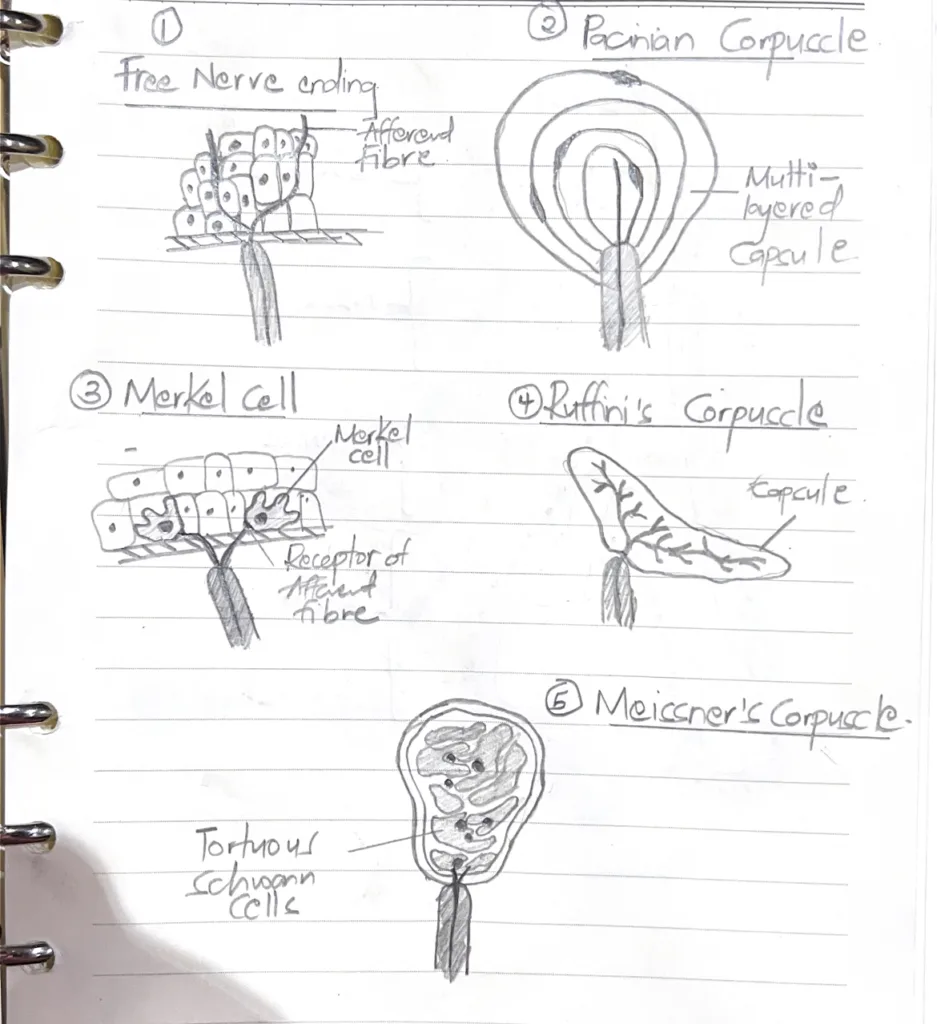
- Merkel’s cells: Sensitive mechanoreceptor cells that contact sensory nerve endings
- Describe the layers of the dermis
- Papillary dermis: More superficial. Contains loose connective tissue containing Type I and Type III collagen. Thinner and forms dermal papillae and dermal ridges.
- Reticular dermis: Deeper. Contains thick irregular connective tissue containing type I collagen and elastic fibres. Thicker than the papillary dermis. Responsible for Langer’s lines.
- Distinguish between apocrine and eccrine sweat glands Eccrine Sweat glands Apocrine sweat glands Lumen Narrower Wider Mechanism of secretion Merocrine secretion Merocrine secretion (previously believed to be apocrine) Contents of secretion Watery secretion Protein-rich secretion containing pheromones Autonomic innervation Adrenergic Cholinergic Stimulus Heat and stress Emotional and sensory stimuli
- Describe the structure and function of the neural elements in skin
- Unencapsulated nerve endings
- Free nerve endings: fine touch, heat, cold, pain
- Pacinian corpuscles: pressure changes and vibrationMeissner’s corpuscles: Sensitivity to light touchRuffini’s corpuscles: Sensitive to skin stretch and torque
- Unencapsulated nerve endings