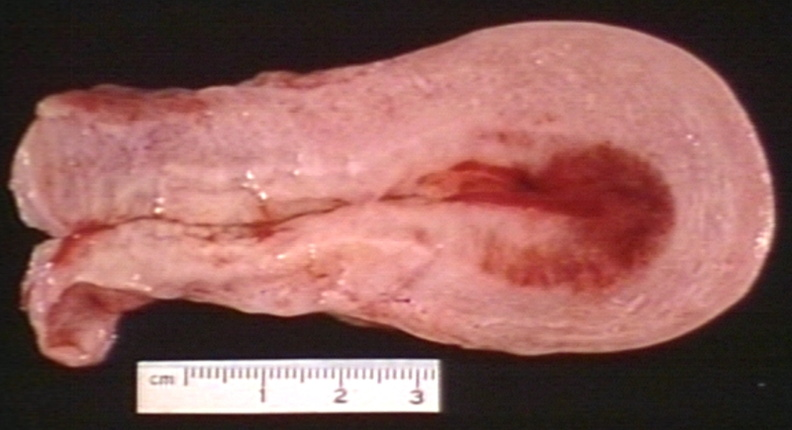
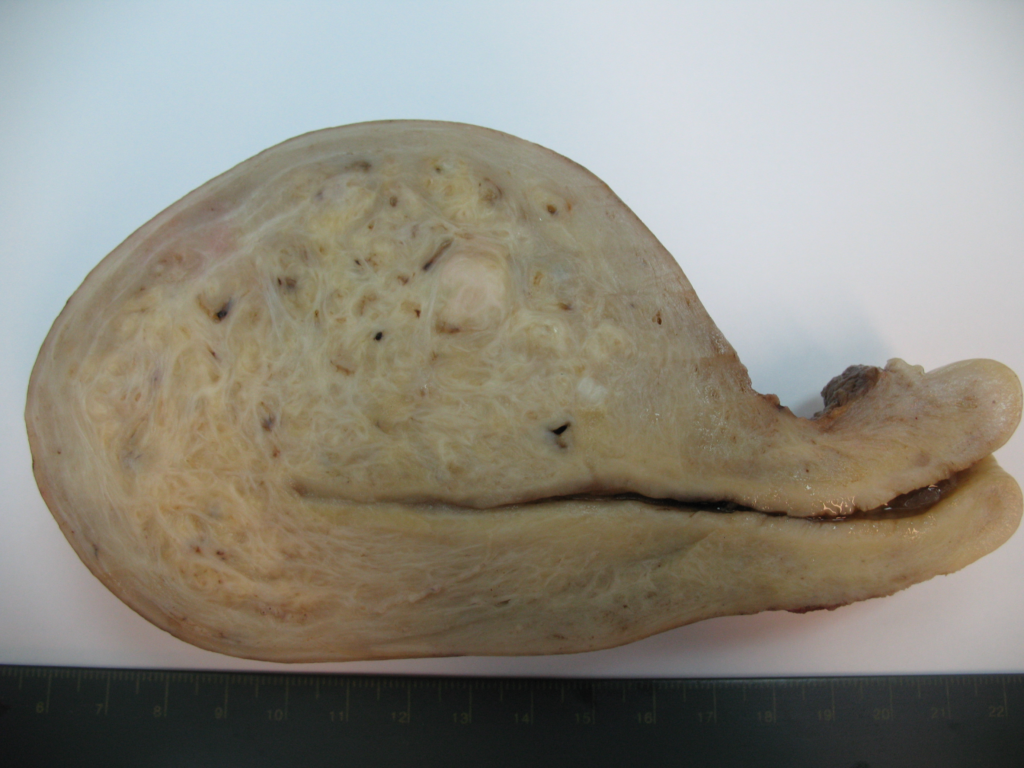
Adenomyosis is uterine enlargement caused by focal or diffuse ectopic rests of endometrial tissue within the myometrium. Pathogenesis is not fully understood. Most likely due to direct invasion of the endometrium into the myometrium. The most common symptoms are abnormal uterine bleeding and secondary dysmenorrhea. Severity of symptoms correlates with foci and extent of invasion. Treatment focuses on controlling pain and bleeding.
Most women with adenomyosis present in their 40s and 50s (older but pre-menopausal – should get better with menopause). Most women with endometriosis present at a younger age. Most of the cases of adenomyosis are diagnosed during hysterectomy (20-60%). No racial differences. Many women with adenomyosis also have fibroids and may be at risk of endometrial cancer (likely have higher estrogen levels)
Increased vascularization of the endometrium near the adenomyotic foci
Ectopic estrogen production
Similarities between fibroids and endometriosis
Characterized by ectopic endometrial tissue
Both cause pelvic pain
Both are hormonally snesitive
Both cause pain and are related to elevated prostaglandin levels (endometrial tissue in both have elevated COX-2)
Both significantly remit after menopause
Signs and symptoms
Abnormal Uterine Bleeding
Secondary Dysmenorrhea (Pelvic pain)
Similar to uterine contractions in labour
May not be localized to the uterus or pelvis (endometrial implants on the uterosacral ligaments may localize/refer to the back)
Dyspareunia (10%)
Subfertility (Fertility issues is not as common as with endometriosis – women develop adenomyosis later in life as compared to endometriosis; However there is an increased risk of ectopic pregnancy)
Physical exam
Visual inspection: Normal
Speculum exam: Normal
Bimanual exam: enlarged and tender uterus
Diffusely enlarged and boggy in adenomyosis
Focal adenomyosis can present as fibroids, eliciting a “lumpy, bumpy” texture
Investigations
Transvaginal ultrasound: best initial test.
Increased thickness of the myometrium
Myometrial heterogeneity
Small hypoechoic cysts in the myometrium
Striated projections from endometrium into myometrium
MRI: more accurate. Used to distinguish adenomyosis from fibroids.
Other labs
Urine hCG
Urinalysis and culture
Vaginal and cervical cancer
CBC
Treatment
Combined oral contraceptives or Progestins: shrink foci, endometrial tissue will not be active (reduces prostaglandin production), controls bleeding – first line
Relieve pain: NSAIDs (for breakthrough painor for women wishing to become pregnant)
Surgical treatment
Hysterectomy: most definitive
Endometrial ablation (controversial – surgery on the uterus can worsen adenomyosis)
Uterine artery embolization (controversial)
Ultrasound showing adenomyosisNormal uterusUterus with adenomyosis
To provide the best experiences, we use technologies like cookies to store and/or access device information. Consenting to these technologies will allow us to process data such as browsing behavior or unique IDs on this site. Not consenting or withdrawing consent, may adversely affect certain features and functions.
Functional
Always active
The technical storage or access is strictly necessary for the legitimate purpose of enabling the use of a specific service explicitly requested by the subscriber or user, or for the sole purpose of carrying out the transmission of a communication over an electronic communications network.
Preferences
The technical storage or access is necessary for the legitimate purpose of storing preferences that are not requested by the subscriber or user.
Statistics
The technical storage or access that is used exclusively for statistical purposes.The technical storage or access that is used exclusively for anonymous statistical purposes. Without a subpoena, voluntary compliance on the part of your Internet Service Provider, or additional records from a third party, information stored or retrieved for this purpose alone cannot usually be used to identify you.
Marketing
The technical storage or access is required to create user profiles to send advertising, or to track the user on a website or across several websites for similar marketing purposes.