Planning is a highly effective way to increase productivity. Weekly planning is better than daily planning since it is close enough to be relevant but distant enough to show the bigger picture. I recommend taking 20-30 minutes alone before the week begins to plan. You can do this on Friday, Saturday, or preferably on Sunday evening. You can plan on a notebook, Google Calendar, or the reminder app on your phone.
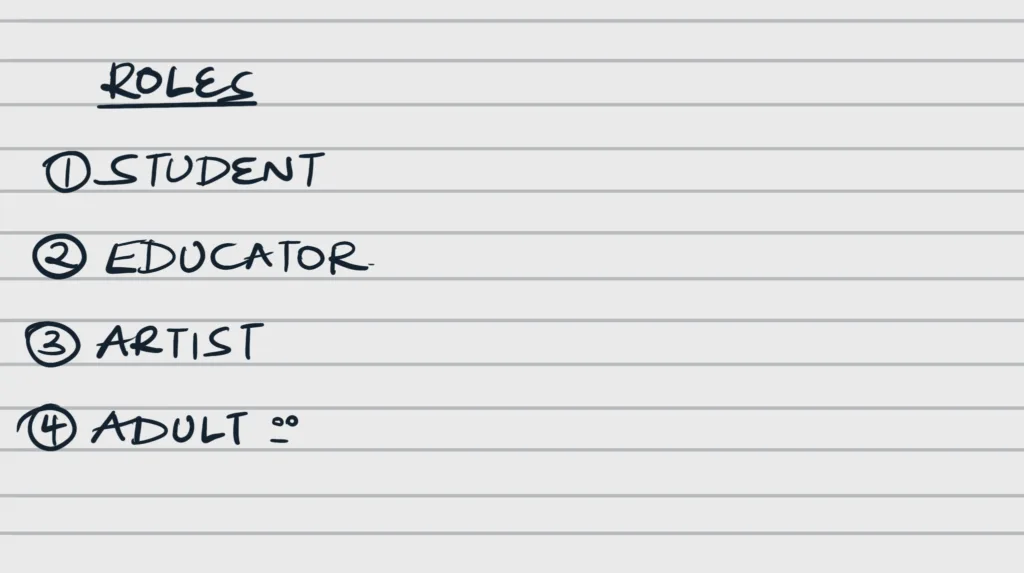
1. Identify your roles
Identify the important roles you play in your life. They could be responsibilities you have or relationships. Some examples include being a student, a leader, a friend, or a volunteer. Planning around the roles you play maintains balance and focuses on key relationships, rather than focusing on individual tasks you have to complete.
Identify your roles
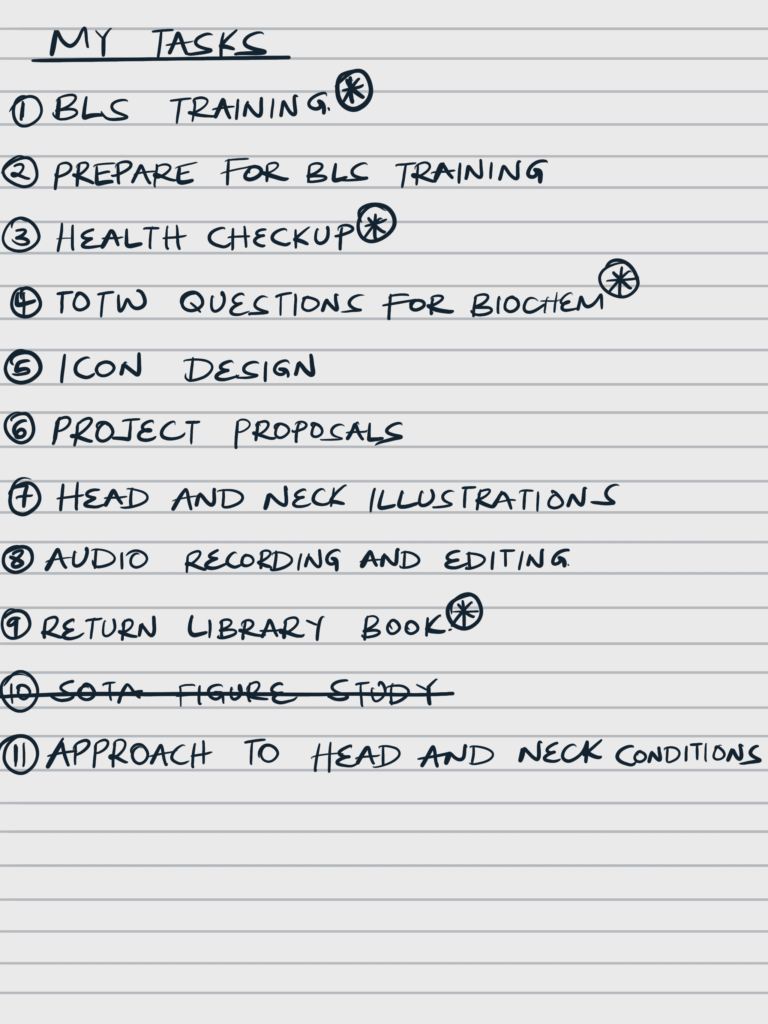
2. Identify your priorities for each role
The next step is to identify your priorities for each role. Start by listing all the tasks you have to complete for the week. Write them all down on a piece of paper or a digital list. By listing all your tasks you can step back and evaluate what is important. Choose the tasks that have the biggest impact on your mission and goals. Ask yourself, “What are the most important things I could do in each role this week that will make the most positive difference?”. These tasks are your priorities. Then cross out tasks that are much less important to allow you to focus your energy on those that matter.
Identify your priorities
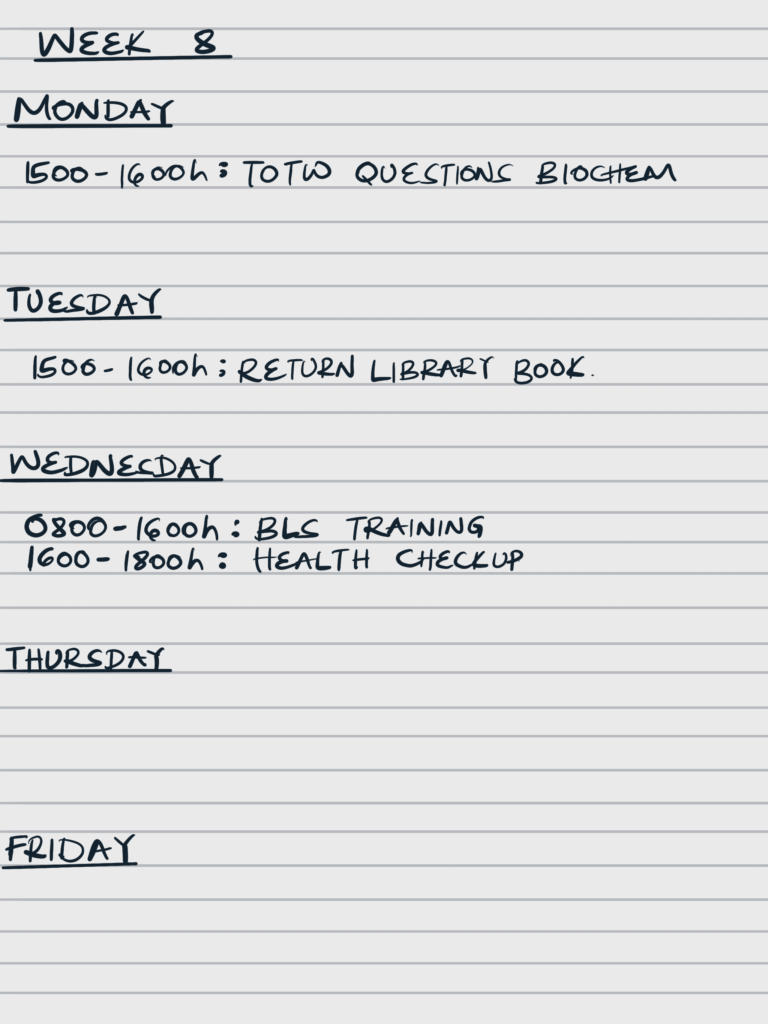
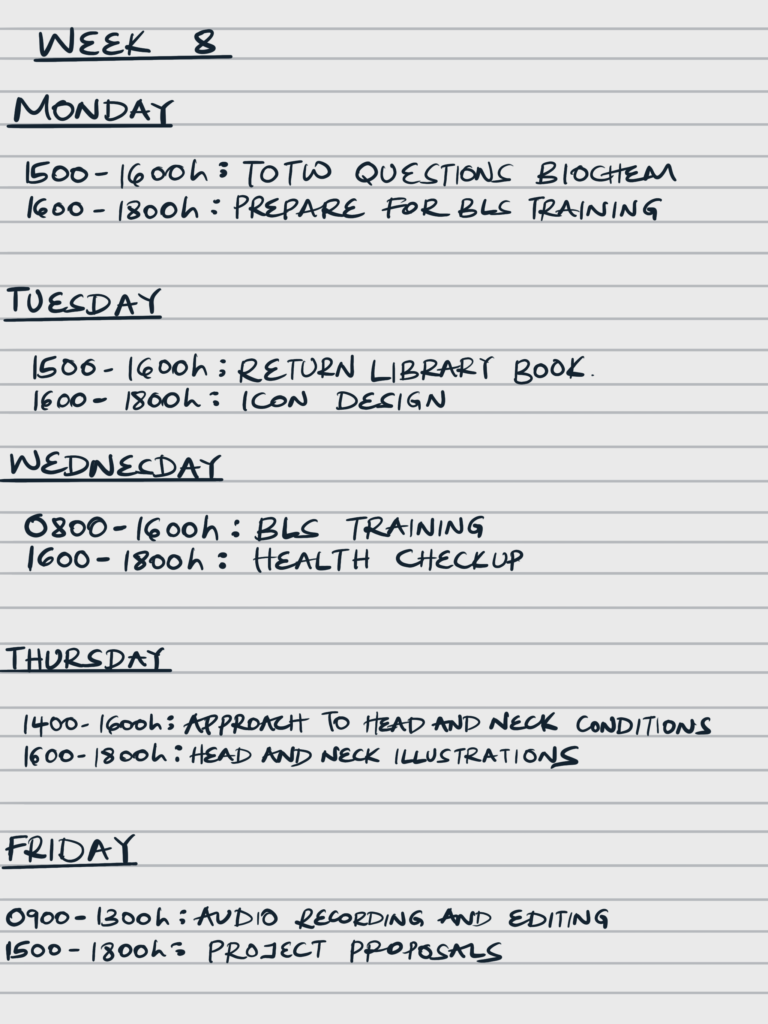
3. Schedule your tasks
Start by scheduling your priorities, then schedule other tasks around them. Set aside a specific time slot for each task. For example, “10 am – 11 am – Clean Room. This approach allows you to give the task your full attention and adds structure and a sense of urgency to complete the task.
Schedule your prioritiesSchedule your tasks around your priorities
4. Morning reflection
Morning reflection helps to kick-start the day with the right attitude. Take a moment in the morning to sit down with your list of tasks for the day. Remind yourself why you have to do those tasks. You can do this while enjoying a cup of tea or commuting to work. A bonus tip is to visualize yourself doing the task. This gives a burst of motivation and makes it easier to complete the task.
5. Evening reflection
Evening reflection helps to unwind and unburden your mind. It helps you feel that the day is complete and allows moving uncompleted tasks to another day. Review the tasks you completed during the day and mark them as done. Each time you cross something off your list celebrate. Then reschedule uncompleted tasks.
Consistency in planning is key to long-term success. By following these steps and making adjustments along the way you can become more productive and achieve your goals effectively.
To provide the best experiences, we use technologies like cookies to store and/or access device information. Consenting to these technologies will allow us to process data such as browsing behavior or unique IDs on this site. Not consenting or withdrawing consent, may adversely affect certain features and functions.
Functional
Always active
The technical storage or access is strictly necessary for the legitimate purpose of enabling the use of a specific service explicitly requested by the subscriber or user, or for the sole purpose of carrying out the transmission of a communication over an electronic communications network.
Preferences
The technical storage or access is necessary for the legitimate purpose of storing preferences that are not requested by the subscriber or user.
Statistics
The technical storage or access that is used exclusively for statistical purposes.The technical storage or access that is used exclusively for anonymous statistical purposes. Without a subpoena, voluntary compliance on the part of your Internet Service Provider, or additional records from a third party, information stored or retrieved for this purpose alone cannot usually be used to identify you.
Marketing
The technical storage or access is required to create user profiles to send advertising, or to track the user on a website or across several websites for similar marketing purposes.
Trying this right now!