A 45-year-old woman with breast cancer on adjuvant chemotherapy presents with a fever of 38.9°C, chills, and malaise. She looks acutely unwell. On physical examination, she has hypotension (BP 90/60 mmHg), tachycardia , with no localising source of infection.
Her laboratory results: WBC 0.3 ×10⁹/L, neutrophils 0.1 ×10⁹/L.
Q1. What is the diagnosis? The diagnosis is neutropenic fever or sepsis
Fever is defined as a single oral temperature of≥ 38.3 C or an oral temperature of ≥ 38 C sustained for 1 hour
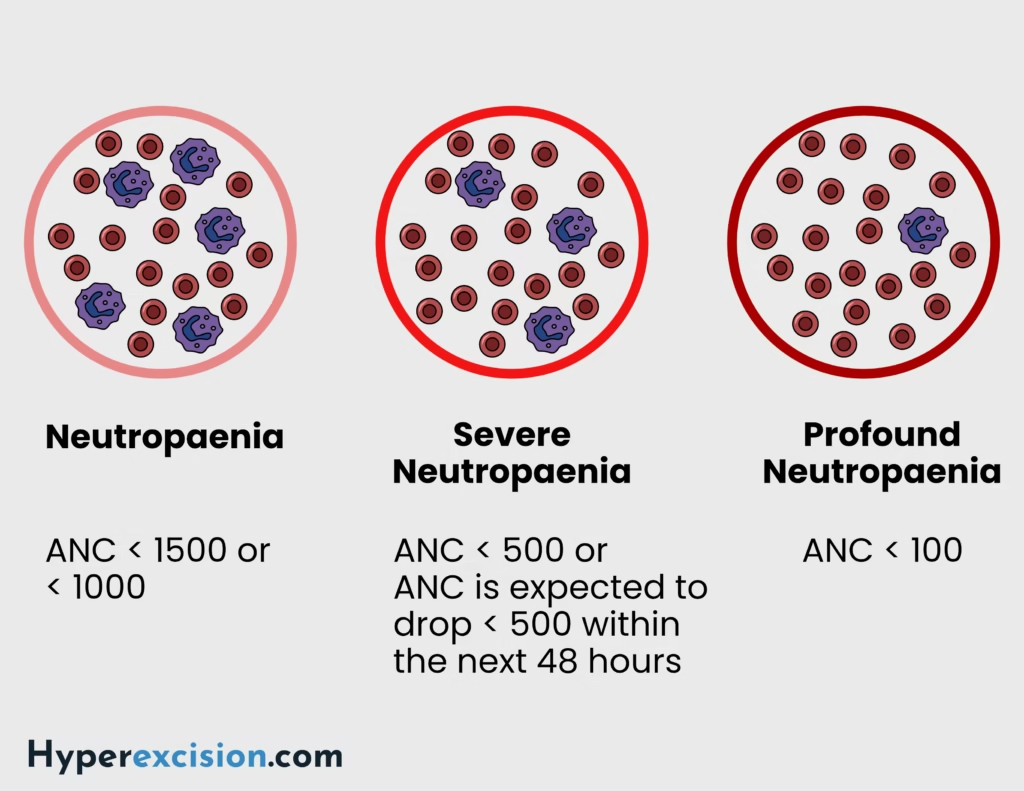
Severe neutropenia is defined as ANC < 500 or expected to drop to < 500 within 48 hours
Neutropenia tends to occur 7 days after cytotoxic chemotherapy and lasts ≤ 7 days in patients with solid tumours.
Leukaemia/lymphoma regimens may cause longer-lasting, profound neutropenia
Mean time to defervescence is 5 days in haematologic malignancies and 2 days for solid tumours
Definition of neutropenia Q2. Neutropenic fever is a common oncologic emergency. Classify the other oncological emergencies Category Oncological emergencies Metabolic Hypercalcaemia of malignancy, tumor lysis syndrome, SIADH Neurologic Spinal cord compression, brain herniation, Cardiovascular Malignant pericardial effusion, superior vena cava syndrome Haematologic Hyperviscosity syndrome, hyperleukocytosis, DIC Infectious Neutropenic fever, septic shock
Q3. What organisms commonly cause neutropenic fever? Escherichia coli
Klebsiella
Staphylococcus epidermidis
Staphylococcus aureus
Pseudomonas aeruginosa
Candida and Aspergillus
The causative organism is identified in only < 50% of cases
There is a trend towards Gram-positive organisms due to the introduction of long-term indwelling catheters
Q4. What are the risk factors for developing neutropenic fever? Older age
Poor performance status
Haematologic malignancy
Medical comorbidities, e.g., chronic kidney disease
Low body mass index
Low baseline WBC before chemotherapy
Q5. What is the pathogenesis of neutropenia fever? Reduced WBC production → reduced phagocytosis, reduced production of inflammatory mediators
Possible sources of infection: disrupted gastrointestinal mucosal barrier, indwelling catheters, altered gut microbiome
Q6. What is the initial management of this patient?
Broad-spectrum IV antibiotics immediately (within 1 hour)
piperacillin/tazobactam or cefepime or meropenem or imipenem
Add aminoglycoside or fluoroquinolone + vancomycin if shock/severe sepsis
Add vancomycin or linezolid if evidence of skin/soft tissue infection
Amoxicillin/clavulanate can be given for low-risk patients
Avoid digital rectal exam or manipulationCareful oral examination and examination of catheter sites, if anyInvestigations to order: Blood culture (preferably before IV antibiotics, but should not delay the antibiotics) Urinalysis and urine culture Lumbar puncture, abdominal CT, or echocardiogram is recommended if symptoms suggest infection in the relevant location A central venous catheter can be removed if there is a proven line infection, endocarditis , or S.aureus/pseudomonas/fungal infection. G-CSF, e.g., filgastrim, pegfilgastrim, is used for prophylaxis The duration of antibiotics is until the patient is afebrile for > 2 days or ANC > 500 if the source is unknown. If the source is known, antibiotics are given for the usual duration of the source, and until ANC reaches > 500 Antifungals, e.g., liposomal amphotericin B, voriconazole, and caspofungin, are added after 5 – 7 days with persistent fever without a clear source
Biochemistry
ACTH P: <80 ng/L ALT P: 5–35 U/L Albumin P: 35–50 g/L Aldosterone P: 100–500 pmol/L Alk. phosphatase P: 30–130 U/L α-Amylase P: 0–180 IU/dL α-Fetoprotein S: <10 kU/L Angiotensin II P: 5–35 pmol/L ADH P: 0.9–4.6 pmol/L AST P: 5–35 U/L Bicarbonate P: 24–30 mmol/L Bilirubin P: 3–17 μmol/L BNP P: <50 ng/L CRP P: <10 mg/L Calcitonin P: <0.1 mcg/L Calcium (ionized) P: 1.0–1.25 mmol/L Calcium (total) P: 2.12–2.60 mmol/L Chloride P: 95–105 mmol/L Cholesterol P: <5.0 mmol/L VLDL P: 0.128–0.645 mmol/L LDL P: <2.0 mmol/L HDL P: 0.9–1.93 mmol/L Cortisol AM P: 450–700 nmol/L Cortisol Midnight P: 80–280 nmol/L CK ♂ P: 25–195 U/L CK ♀ P: 25–170 U/L Creatinine P: 70–100 μmol/L Ferritin P: 12–200 mcg/L Folate S: 2.1 mcg/L FSH P: 2–8 U/L ♂; >25 menopause GGT ♂ P: 11–51 U/L GGT ♀ P: 7–33 U/L Glucose (fasting) P: 3.5–5.5 mmol/L Growth hormone P: <20 mu/L HbA1C (DCCT) B: 4–6% HbA1C (IFCC) B: 20–42 mmol/mol Iron ♂ S: 14–31 μmol/L Iron ♀ S: 11–30 μmol/L Lactate (venous) P: 0.6–2.4 mmol/L Lactate (arterial) P: 0.6–1.8 mmol/L LDH P: 70–250 U/L LH P: 3–16 U/L Magnesium P: 0.75–1.05 mmol/L Osmolality P: 278–305 mosmol/kg PTH P: 0.8–8.5 pmol/L Potassium P: 3.5–5.3 mmol/L Prolactin ♂ P: <450 U/L Prolactin ♀ P: <600 U/L PSA P: 0–4 mcg/mL Protein (total) P: 60–80 g/L Red cell folate B: 0.36–1.44 μmol/L Renin (erect) P: 2.8–4.5 pmol/mL/h Renin (recumbent) P: 1.1–2.7 pmol/mL/h Sodium P: 135–145 mmol/L TBG P: 7–17 mg/L TSH P: 0.5–4.2 mU/L T4 P: 70–140 nmol/L Free T4 P: 9–22 pmol/L TIBC S: 54–75 μmol/L Triglycerides P: 0.50–2.3 mmol/L T3 P: 1.2–3.0 nmol/L Troponin T P: <0.1 mcg/L Urate ♂ P: 210–480 μmol/L Urate ♀ P: 150–390 μmol/L Urea P: 2.5–6.7 mmol/L Vitamin B12 S: 0.13–0.68 nmol/L Vitamin D S: 50 nmol/L
Arterial Blood Gases
pH 7.35–7.45 PaCO₂ 4.7–6.0 kPa PaO₂ >10.6 kPa Base excess ±2 mmol/L
Urine
Cortisol (free) <280 nmol/24h Hydroxyindole acetic acid 16–73 μmol/24h Hydroxymethylmandelic acid 16–48 μmol/24h Metanephrines 0.03–0.69 μmol/mmol cr. Osmolality 350–1000 mosmol/kg 17-Oxogenic steroids ♂ 28–30 μmol/24h 17-Oxogenic steroids ♀ 21–66 μmol/24h 17-Oxosteroids ♂ 17–76 μmol/24h 17-Oxosteroids ♀ 14–59 μmol/24h Phosphate (inorganic) 15–50 mmol/24h Potassium 14–120 mmol/24h Protein <150 mg/24h Protein/creatinine ratio <3 mg/mmol Sodium 100–250 mmol/24h
Haematology
WCC 4.0–11.0 ×10⁹/L RBC ♂ 4.5–6.5 ×10¹²/L RBC ♀ 3.9–5.6 ×10¹²/L Hb ♂ 130–180 g/L Hb ♀ 115–160 g/L PCV ♂ 0.4–0.54 L/L PCV ♀ 0.37–0.47 L/L MCV 76–96 fL MCH 27–32 pg MCHC 300–360 g/L RDW 11.6–14.6% Neutrophils 2.0–7.5 ×10⁹/L (40–75%) Lymphocytes 1.0–4.5 ×10⁹/L (20–45%) Eosinophils 0.04–0.44 ×10⁹/L (1–6%) Basophils 0–0.10 ×10⁹/L (0–1%) Monocytes 0.2–0.8 ×10⁹/L (2–10%) Platelets 150–400 ×10⁹/L Reticulocytes 0.8–2.0% / 25–100 ×10⁹/L Prothrombin time 10–14 s APTT 35–45 s
Paediatric
Pulse Rate (bpm) Neonate 140–160 Infant <1yr 120–140 1–5 years 110–130 5–12 years 80–120 >12 years 70–100 Respiratory Rate (tachypnoea) 0–2 months ≥60/min 2–12 months ≥50/min 1–5 years ≥40/min >5 years ≥30/min Blood Pressure (mmHg) Term 65/45 1 year 75/50 4 years 85/60 8 years 95/65 10 years 100/70 Weight Formulas 3–12 months (a + 9)/2 kg 1–6 years 2a + 8 kg >6 years (7a − 5)/2 kg Haemoglobin (g/dL) Term newborn 13–20 1 month 11–18 2 months 10–15 1–2 years 10–13 >2 years 11–14 MUAC (6 months–5 years) Obese >17.5 cm Normal 13.5–17.4 cm At risk 12.5–13.4 cm Moderate malnutrition 11.5–12.4 cm Severe malnutrition <11.5 cm Developmental Milestones Social smile 1.5 months Head control 4 months Sits unsupported 7 months Crawls 10 months Stands unsupported 10–12 months Walks 12–13 months Talks 18 months CSF WBC (/mm³) Term newborn 0–25 >2 weeks 0–5